


10 Essential Tips for Choosing the Perfect Winch: A Buyer's Guide
Choosing the right winch means matching the complete system to the work it will actually perform. The largest headline capacity is not automatically the best choice: pulling resistance, operating frequency, power supply, drum layers, rope, mounting structure and working environment all affect real-world performance.
Use these ten checks to compare recovery winches properly before you buy.
1. Define the Winch’s Main Job
Start with the application rather than the product specification. A 4x4 used for occasional self-recovery, a car transporter loading freely rolling vehicles and a recovery truck handling damaged commercial vehicles all place different demands on a winch.
Consider:
- What will be moved? Include the heaviest realistic casualty or load.
- How much resistance is likely? Locked wheels, damaged running gear, mud, gradients and obstacles can increase the required pulling force substantially.
- How frequently will the winch operate? Occasional short pulls and repeated professional recoveries require different duty capabilities.
- Where will it work? Roadside recovery, off-road use, plant, industrial and marine environments create different installation and protection requirements.
2. Calculate Required Pulling Force, Not Just Vehicle Weight
A winch rating describes pulling force; it is not a simple maximum vehicle-weight limit. A freely rolling vehicle on level ground may require far less force than its total mass, while a lighter casualty with seized brakes or buried wheels may require considerably more.
Estimate the greatest realistic resistance, then select suitable capacity and operating margin for that workload. If you are specifying a recovery vehicle, start with what size winch you need for a recovery truck. Our 13,500lb vs 18,000lb vs 20,000lb comparison explains how the main capacity classes differ.
3. Choose Between Electric and Hydraulic Power
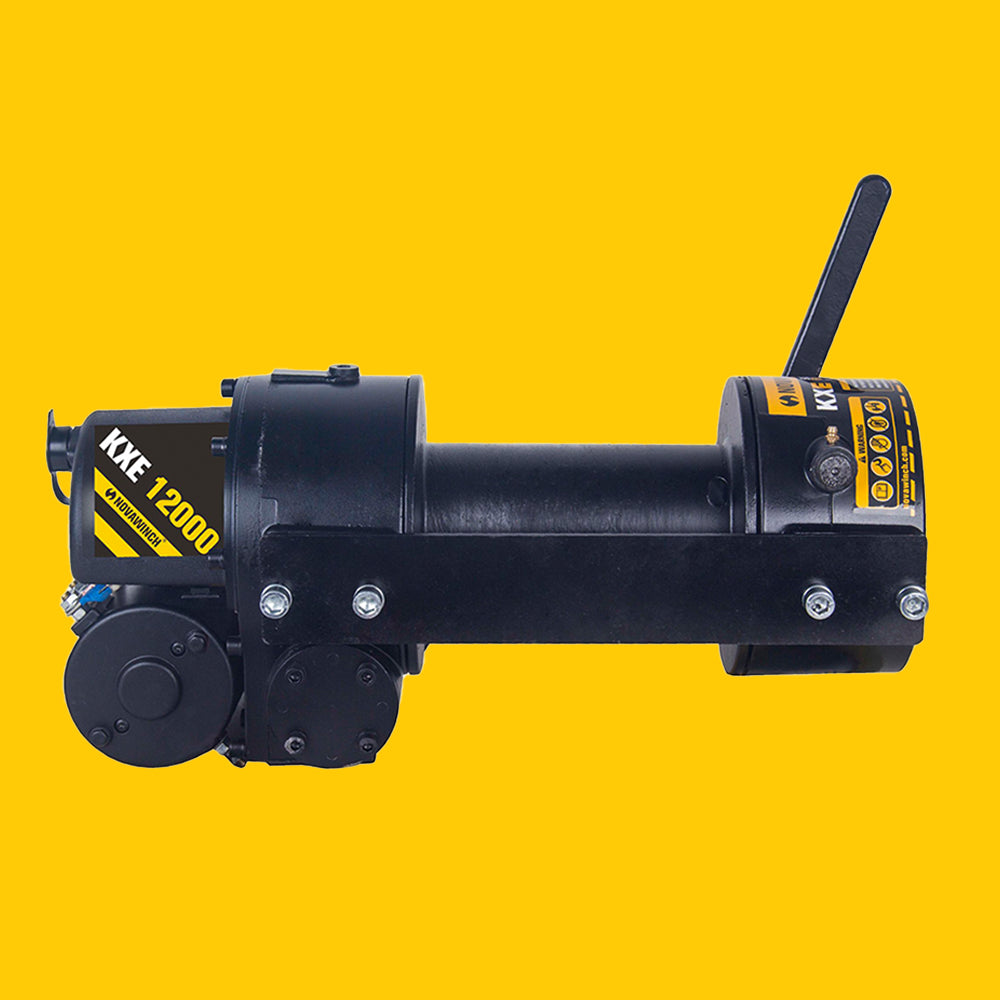
Electric winches are straightforward to install where a suitable 12V or 24V electrical system is available. They are often well suited to intermittent vehicle loading, 4x4 recovery and many transporter applications.
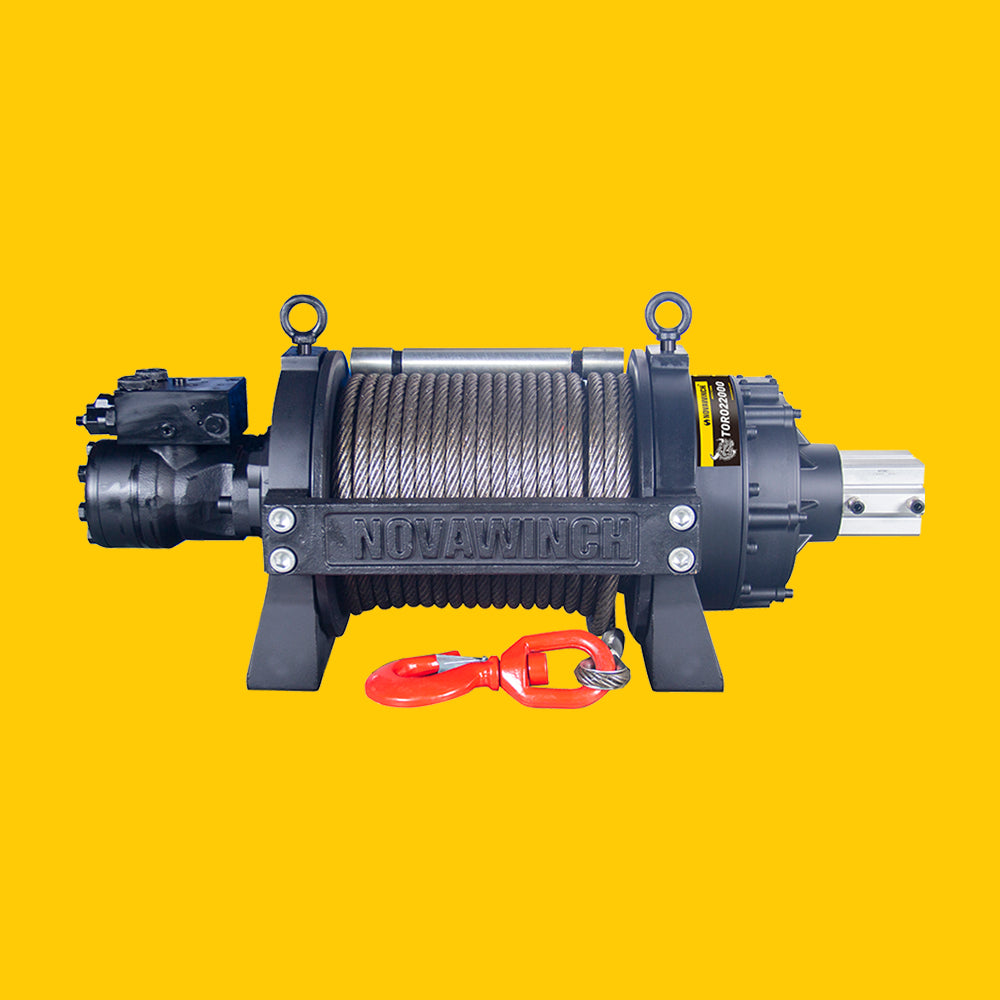
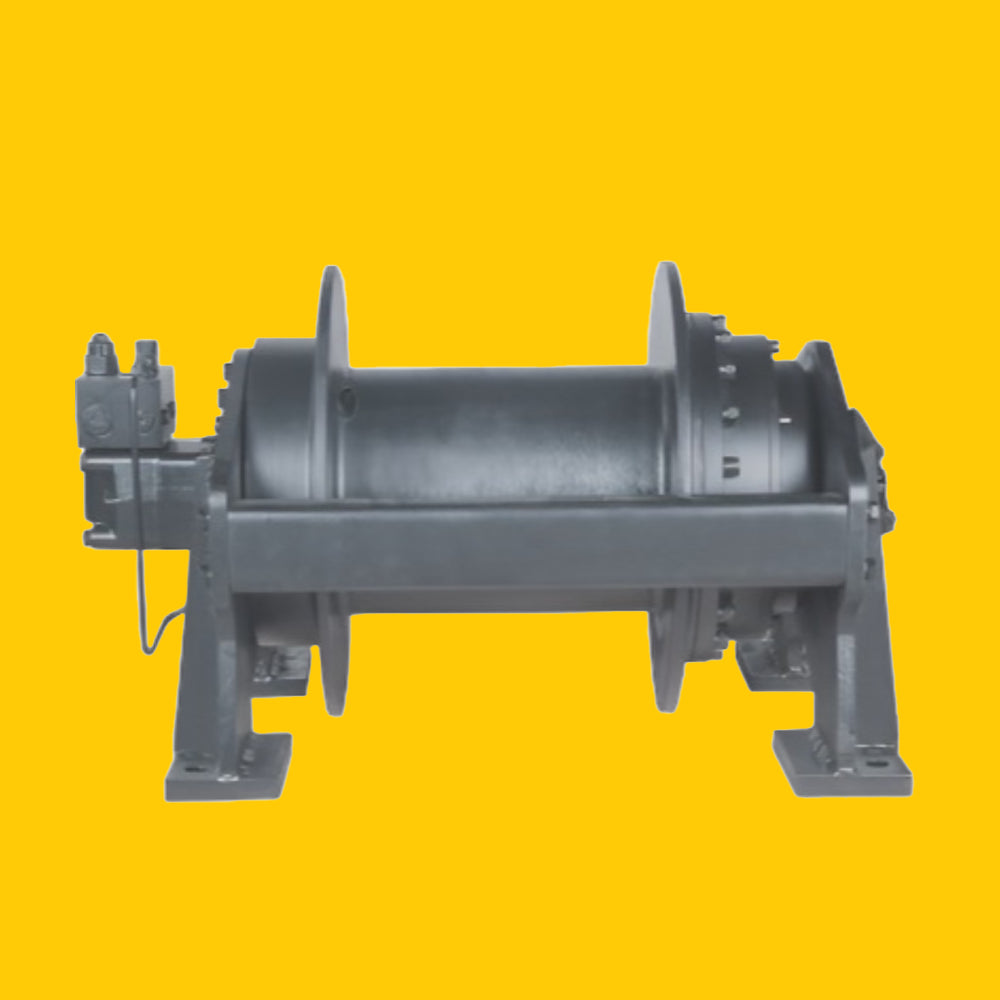
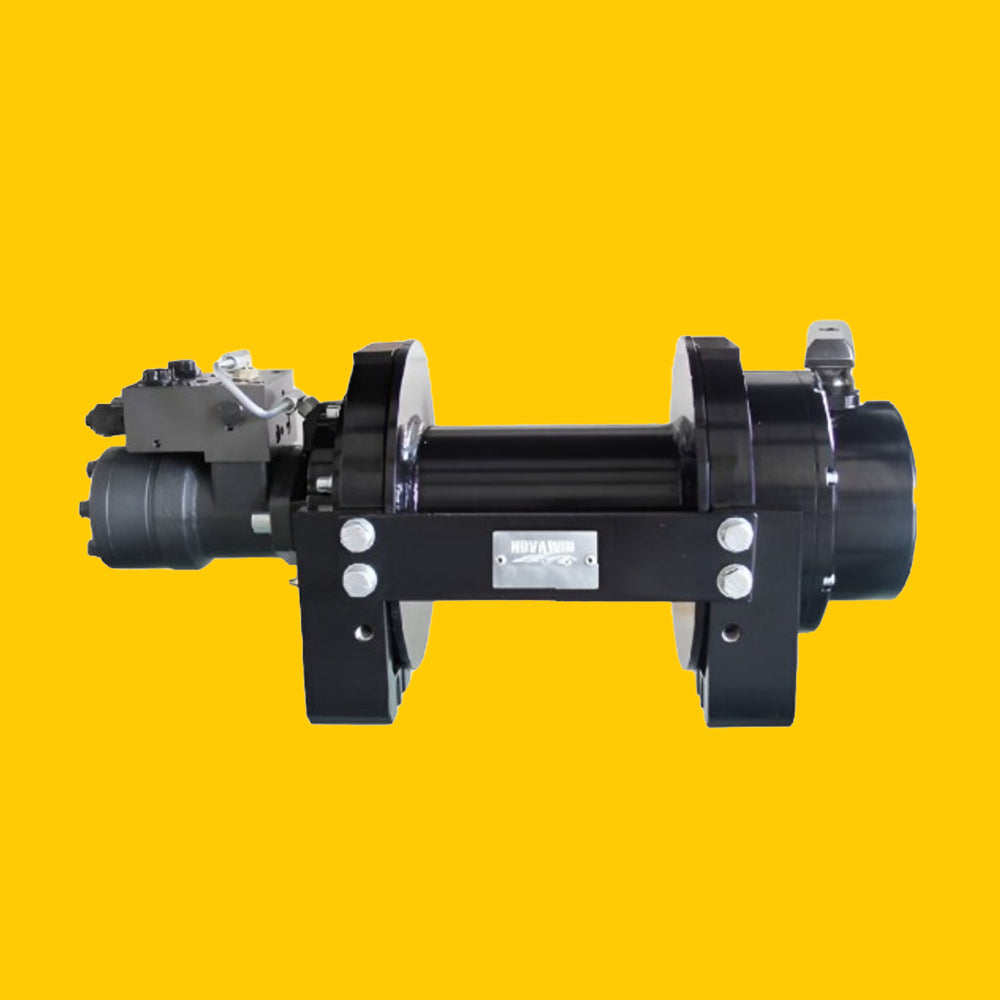
Hydraulic winches use the vehicle or machine’s hydraulic system. When correctly specified, they can suit frequent or sustained professional recovery, but the pump, flow, pressure, reservoir, filtration and cooling must all match the winch.
Neither type is automatically better. Compare installation complexity, duty cycle, vehicle systems and expected workload using our detailed electric vs hydraulic recovery winch guide.
4. Match the Winch to the Available Power System
For an electric winch, check more than the nominal voltage. Battery capacity, alternator output, cable size, cable length, isolators, fuses and electrical connections all influence performance and reliability. The vehicle must be able to supply the current demanded under load.
A 12V winch must not be connected to a 24V supply, and vice versa. Commercial vehicles commonly use 24V systems, while many 4x4s and light vehicles use 12V. See 12V vs 24V winches for recovery trucks for the practical differences.
For a hydraulic winch, confirm the available hydraulic pressure and flow against the manufacturer’s operating range rather than assuming any hydraulic circuit will be suitable.
5. Compare Line Pull Across Every Drum Layer
The advertised rated line pull is normally the maximum available on the first rope layer, closest to the drum core. As rope builds onto the drum, the effective drum radius increases and available pulling force decreases.
This matters because many recoveries begin with several layers still on the drum. Compare the manufacturer’s line-pull-by-layer data and make sure the winch provides adequate force in the drum position you will actually use. Our guide to winch line pull and drum layers explains the effect in detail.
Also check rope capacity. More rope provides reach, but excessive rope creates more drum layers and may reduce usable first-layer access.
6. Select the Right Rope and Fairlead
Steel wire rope and synthetic rope can both be appropriate when specified correctly. The best option depends on the application, handling requirements, inspection routine and exposure to abrasion, heat and contaminants.
- Steel wire rope: Resistant to abrasion and widely used in professional recovery, but heavier and capable of developing broken wires, kinks and corrosion.
- Synthetic rope: Lighter and easier to handle, but requires protection from sharp edges, abrasion, heat and incompatible surfaces.
The rope’s construction, diameter, length and rating must suit the winch. Match the fairlead to the rope type and follow the manufacturer’s spooling requirements. Read our synthetic vs steel winch rope comparison before deciding.
7. Check Dimensions, Mounting Pattern and Structural Support
Confirm the winch will physically fit before ordering. Compare its overall length, width and height, the drum and motor clearance, mounting-foot orientation and bolt pattern.
The mounting tray, bumper, body structure or subframe must also be designed to transfer the winch load safely into the vehicle or machine. A mount that physically accepts the bolt pattern is not necessarily strong enough for the rated pull.
Allow space for:
- Electrical or hydraulic connections
- Fairlead alignment
- Clutch access
- Rope spooling and inspection
- Maintenance and control components
8. Compare Line Speed and Duty Cycle Under Load
No-load line speed can be useful, but it does not show how the winch performs during a demanding pull. Compare line speed at realistic loads together with motor current or hydraulic flow requirements.
Duty cycle is equally important. Electric motors, contactors and cables generate heat during operation, while hydraulic systems depend on adequate fluid flow, reservoir capacity and cooling. Choose a winch designed for the duration and frequency of work you expect, and follow the specified rest periods and temperature limits.
9. Choose Protection for the Working Environment
Water, road salt, mud, dust and chemicals can affect the winch, controls, terminals, rope and mounting hardware. Look for suitable sealing, corrosion protection and service access for the intended environment.
An IP rating describes defined levels of protection against solid particles and water under test conditions; it does not make every part of an installation maintenance-free or suitable for unlimited submersion. Learn how to interpret the figures in our guide to winch IP ratings.
10. Review the Brake, Controls and Complete Recovery System
Check the braking system, clutch, remote controls and emergency isolation arrangements. A wired remote provides a dependable direct connection, while a wireless remote can give the operator more freedom to choose a suitable viewing position. Some systems include both.
The winch is only one part of the recovery system. Rope, hook, fairlead, battery cables or hydraulic hoses, isolator, mounting structure, recovery points, shackles, straps and pulley blocks must all be compatible and appropriately rated.
Read the manufacturer’s instructions before use and build inspection and maintenance into the operating routine. Our essential winch safety tips cover the key precautions.
Winch Buyer’s Checklist
Before placing an order, confirm:
- The intended application and greatest realistic resistance
- Required line pull with a suitable operating margin
- Electric or hydraulic power source
- Correct voltage, current supply or hydraulic pressure and flow
- Line pull and speed across the relevant drum layers
- Rope type, diameter, length and fairlead compatibility
- Overall dimensions, mounting pattern and structural support
- Expected duty cycle and operating frequency
- Environmental protection and maintenance requirements
- Brake, controls and ratings of all recovery accessories
Choose a Winch for the Complete Job
The right winch is the model that fits the vehicle, power system, mounting structure and realistic workload as a complete package. Avoid choosing solely by price, motor horsepower or the largest number in the product name.
Explore Novawinch’s electric and hydraulic winch range, or contact Novawinch if you need help comparing suitable options for your vehicle or application.