%20(1).jpg)
.jpg)


%20(1).jpg)

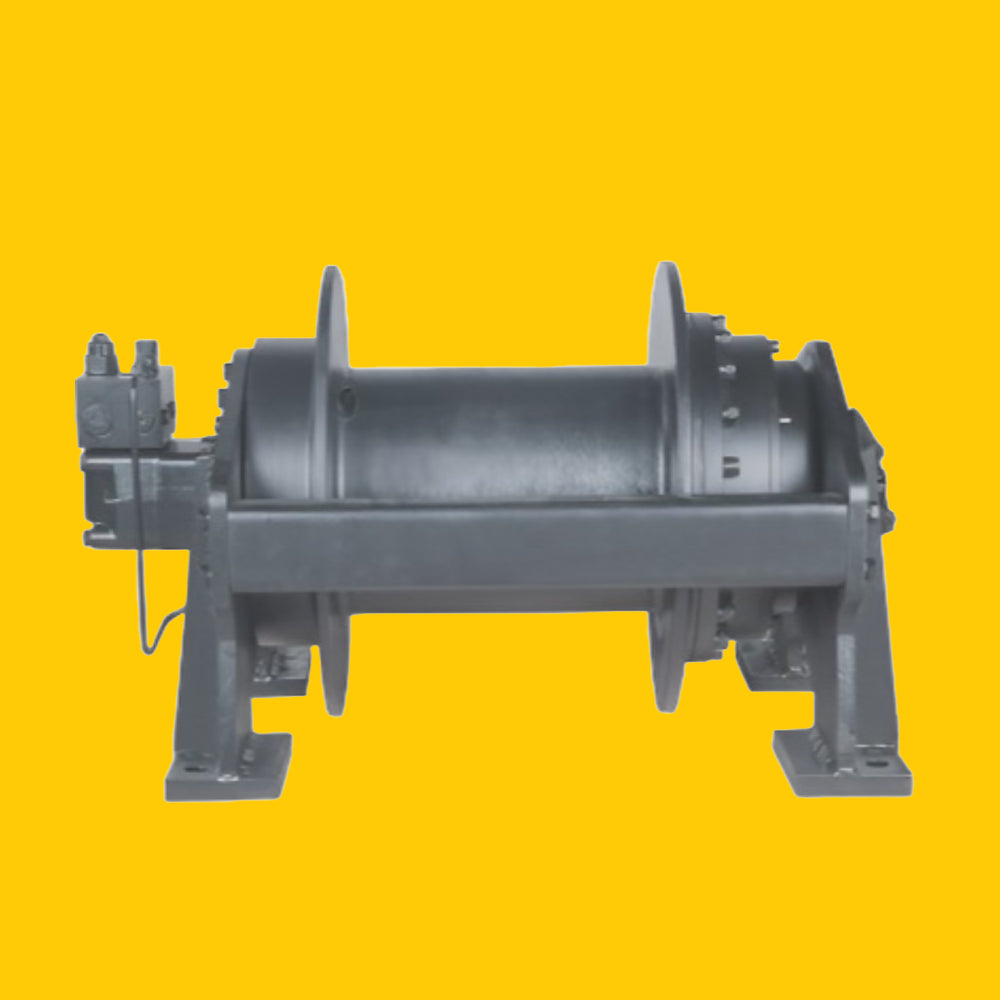

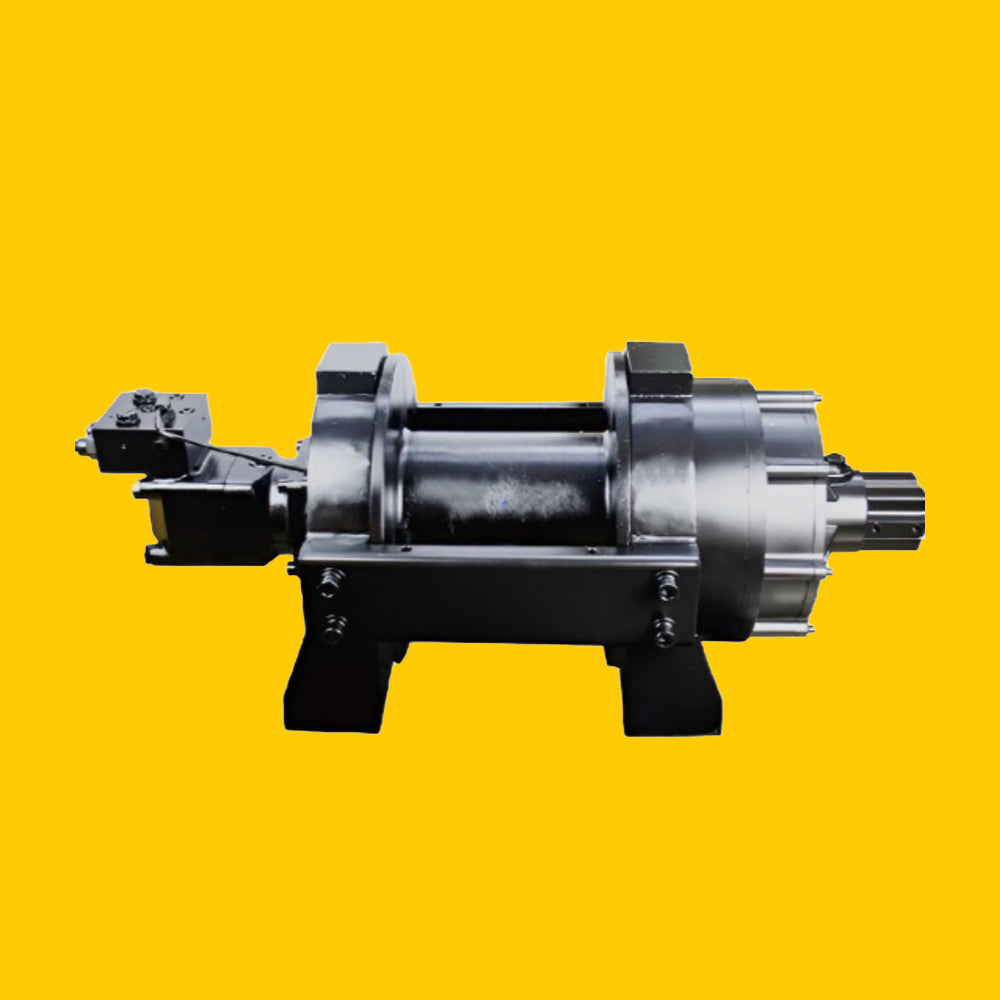


13,500lb vs 18,000lb vs 20,000lb Winch: Which Do You Need?
If you're choosing a winch for a recovery truck or car transporter, the difference between 13,500lb, 18,000lb and 20,000lb can look straightforward. A bigger number means a stronger winch, so buying the largest one should give you the greatest capability.
In reality, that's only part of the story.
A recovery winch has to suit the vehicles you recover, the resistance you're likely to encounter, the way the winch is mounted and the truck's electrical or hydraulic system. Rated line pull also normally represents the winch's strongest position on the drum, not the pulling force available throughout an entire recovery.
For some transporters, a 13,500lb winch may be entirely appropriate. For a professional recovery truck dealing with a wider range of casualties, moving to 18,000lb can provide valuable additional capacity. At 20,000lb and beyond, you're moving further into heavier professional recovery applications where the complete installation becomes increasingly important.
This guide explains the practical differences and, more importantly, why choosing a recovery winch should involve more than simply buying the biggest number you can fit.
What Do 13,500lb, 18,000lb and 20,000lb Actually Mean?
The figure advertised with a winch normally refers to its maximum rated line pull under specified conditions.
So, in simple terms:
- 13,500lb is approximately 6.1 tonnes of force
- 18,000lb is approximately 8.2 tonnes of force
- 20,000lb is approximately 9.1 tonnes of force
That does not mean a 13,500lb winch is intended only for vehicles weighing 6.1 tonnes, or that a 20,000lb winch can automatically recover any 9.1-tonne vehicle.
A winch rating describes pulling force. Vehicle mass is only one factor determining how much force a recovery actually requires.
A freely rolling vehicle on a level hard surface can require considerably less pulling force than its total weight. A vehicle with locked wheels, damaged running gear or tyres buried in soft ground can require much more.
Gradient adds another major load.
This is why matching winch capacity directly to the casualty's weight can be misleading.
Bigger Vehicle Doesn't Always Mean Bigger Pull
Imagine two vehicles with exactly the same mass.
The first is intact, with inflated tyres and freely rotating wheels, and needs to be pulled along a level road surface.
The second has damaged suspension, a locked wheel and is sitting partly off the road on soft ground.
Although both vehicles weigh the same, the second recovery could require dramatically more pulling force.
The winch doesn't know what the casualty weighs. It only experiences the resistance transmitted through the rope.
For recovery operators, the more useful question is therefore:
What is the greatest realistic resistance this winch will need to overcome?
That is the starting point for choosing between 13,500lb, 18,000lb and 20,000lb.
13,500lb vs 18,000lb vs 20,000lb: Quick Comparison
These categories are deliberately broad. They should be treated as starting points rather than maximum vehicle-weight limits.
The actual choice depends on resistance, gradient, winch drum layers, rigging and the operating conditions the recovery vehicle is expected to handle.
When Is a 13,500lb Winch Enough?
A 13,500lb winch can be a very capable option for car transporters, flatbeds and lighter recovery applications.
If the primary job is loading cars and light commercial vehicles that can roll relatively freely, the actual pulling force required may be well below the casualty's total weight. A correctly specified 13,500lb winch can therefore provide considerably more capability than the headline vehicle weights might initially suggest.
This type of winch is particularly attractive where installation space, vehicle electrical capacity and overall system size matter.
However, professional recovery introduces uncertainty.
A vehicle that normally rolls freely may arrive with seized brakes, collapsed suspension, flat tyres or accident damage. It may be below road level, on a gradient or sitting on a high-resistance surface.
As the range of recovery scenarios expands, additional winch capacity provides useful operating margin.
When Should You Move Up to an 18,000lb Winch?
An 18,000lb winch is a strong middle ground for professional recovery vehicles dealing with cars, vans and more demanding casualties.
Compared with 13,500lb, the headline first-layer pulling capacity increases by approximately one third. That additional capability can become important when resistance is greater than expected or when the rope is operating on an outer drum layer.
It also provides more flexibility for a recovery truck expected to handle a broad range of jobs rather than straightforward vehicle loading alone.
This doesn't mean every recovery truck needs 18,000lb.
If the truck exclusively transports normally rolling cars, specifying significantly more winch than the work requires may add unnecessary size, weight, electrical demand or cost.
But where the vehicle performs genuine roadside recovery and casualty condition is less predictable, 18,000lb can provide a useful step up from the typical transporter-style winch.
What About a 20,000lb Winch?
At around 20,000lb, you're moving further into heavier professional recovery territory.
The additional capacity may be useful for larger casualties, higher resistance and recovery trucks expected to tackle more demanding work. Hydraulic options also become increasingly relevant as pulling capacity and operating frequency increase.
However, the difference between an 18,000lb and 20,000lb headline rating is much smaller than the difference between 13,500lb and 18,000lb.
Moving from 13,500lb to 18,000lb gives approximately 33% more rated first-layer pull.
Moving from 18,000lb to 20,000lb gives approximately 11% more.
That makes the second decision more nuanced.
An 18,000lb winch may outperform a poorly specified 20,000lb installation in practical use if it has better line speed, a more suitable power supply, appropriate rope capacity and a better overall installation.
Once you're considering winches around this capacity, compare the complete specification rather than concentrating on the extra 2,000lb printed on the data sheet.
Rated Capacity Is Usually the Best-Case Drum Position
One of the biggest mistakes when comparing recovery winches is assuming the headline rating remains available throughout the entire drum.
It doesn't.
Maximum line pull is normally quoted on the first rope layer, where the rope is closest to the drum core. As rope builds onto the drum, the effective radius increases and the mechanical advantage decreases.
The result is less pulling force on the outer layers.
This can have a surprisingly large effect.
For example, an 18,000lb winch may provide substantially less than 18,000lb once several layers of rope are wrapped around the drum.
For a recovery truck, this matters because many pulls don't begin with most of the rope paid out.
A casualty may be only a few metres behind a flatbed, leaving a substantial amount of rope on the drum. The winch could therefore begin the recovery on its third or fourth layer rather than its strongest first layer.
An 18,000lb Winch Can Become an 11,250lb Winch
The Novawinch HEN18000 provides a useful real-world example.
Its published line pull by drum layer is:
- Layer 1: 18,000lb
- Layer 2: 15,000lb
- Layer 3: 12,857lb
- Layer 4: 11,250lb
By the fourth layer, available line pull has fallen by 37.5% compared with the first-layer rating.
That means an 18,000lb headline winch can provide 11,250lb at the outer published layer.
This is why simply comparing the number printed in the product name isn't enough.
For a full explanation of the mechanics behind this, see Winch Line Pull Explained: Why Your Winch Loses Pulling Power as the Drum Fills.
Could an 18,000lb Winch Actually Pull Less Than a 13,500lb Winch?
Under different drum conditions, yes.
Imagine a 13,500lb winch operating near its first layer while an 18,000lb winch is operating on an outer layer.
Depending on their individual specifications, the smaller winch could temporarily have comparable or even greater available line pull at the rope.
That doesn't mean the 13,500lb winch is stronger overall. It demonstrates why drum position is part of the winch's usable capacity.
When comparing winches for professional recovery, look for manufacturer data showing line pull by layer wherever possible.
Why a Bigger Winch Doesn't Fix Poor Rigging
Increasing winch capacity cannot compensate for an unsuitable recovery setup.
The winch mount and supporting structure need to withstand the loads transferred through the winch. Fairleads, rope, hooks, shackles, pulley blocks and other rigging components also need to be suitable for the forces involved.
As winch capacity increases, those forces can become substantial.
Installing a 20,000lb winch onto a structure originally designed around a much smaller unit doesn't automatically create a 20,000lb recovery system.
The complete load path—from the casualty through the rope and winch into the recovery vehicle—needs to be considered.
What About a Snatch Block?
A correctly configured pulley or snatch block can change the forces and line speed within a recovery system and can be extremely useful when greater mechanical advantage is required.
A double-line arrangement can increase the effective pulling force available at the casualty while reducing its travel speed, subject to real-world losses and the ratings of every component in the system.
It can also help bring more rope off the drum, potentially moving the winch towards a stronger inner layer.
This does not mean a smaller winch plus a snatch block is automatically equivalent to fitting a larger winch.
Rigging introduces additional components, requires suitable anchor points and changes the loads acting on the recovery vehicle and equipment.
The winch should still be appropriately sized for its normal workload.
Electric or Hydraulic?
Capacity and power source are separate decisions, but they increasingly interact as winches get larger.
A 13,500lb electric winch can be well suited to a transporter performing intermittent loading work.
An 18,000lb 24V electric winch can provide substantial capacity for professional recovery, but heavy operation can involve significant electrical current.
As capacity, recovery frequency and pull duration increase, hydraulic becomes increasingly attractive.
A hydraulic winch draws its main operating power from the truck's hydraulic system rather than placing a large high-current load on the batteries. When properly specified, this can make hydraulic better suited to frequent and sustained professional use.
For a detailed comparison, see Electric vs Hydraulic Winches for Recovery Trucks: Which Is Better?
Don't Ignore Line Speed
Pulling capacity is only one side of recovery winch performance.
A winch that provides enormous pulling force but operates very slowly may not be the most productive choice for everyday vehicle loading.
Conversely, an extremely fast winch that cannot comfortably overcome the expected resistance is obviously unsuitable.
Professional operators should therefore look at line speed under load, not only the no-load figure commonly highlighted in specifications.
Line speed also changes as rope builds up on the drum. The increasing effective drum diameter means more rope is recovered per drum revolution, so speed generally increases while available line pull decreases.
The ideal winch balances sufficient pulling capacity with practical working speed.
What About Rope Capacity?
A physically larger winch often provides a larger drum and greater rope capacity, but this needs to be checked rather than assumed.
Think about how much usable rope the truck actually requires.
A flatbed loading vehicles from immediately behind the bed may have very different requirements from a recovery vehicle that needs to reach casualties further from the truck.
Rope diameter matters too.
A larger-capacity winch generally requires appropriately rated rope, and thicker rope occupies more drum space. The relationship between drum size, rope diameter and required length therefore becomes increasingly important as winch capacity rises.
More rope isn't automatically better either. Excessive rope on the drum means more layers, and more layers reduce available line pull.
Steel Wire Rope or Synthetic Rope?
All three capacity classes can potentially use steel wire rope or appropriately specified synthetic rope where the winch design and manufacturer allow it.
The choice should be based on the recovery application, rope specification, inspection regime, handling requirements and the equipment fitted to the truck.
Steel wire rope remains common in professional recovery because of its abrasion resistance and established working practices, while synthetic rope offers significant weight and handling advantages.
Whichever is chosen, its rating and condition are critical.
The rope is part of the recovery system, not an accessory to it.
Consider the Truck's Power System
A larger winch can place greater demands on the vehicle supplying it.
For an electric winch, look at the actual current draw rather than assuming the truck's batteries will cope because they're physically large.
Battery capacity, alternator output, cable size, cable length, electrical connections and expected operating frequency all matter.
For a hydraulic winch, the equivalent questions concern hydraulic pressure, flow, reservoir capacity, filtration and cooling.
This becomes increasingly important as you move towards larger winches and more demanding duty.
A 20,000lb-class winch that cannot receive the power supply it was designed for won't deliver the performance expected from it.
Is It Better to Oversize a Recovery Winch?
Some additional capacity can provide useful operating margin, particularly when casualty resistance is unpredictable.
But "buy the biggest winch possible" isn't a particularly good specification strategy.
A larger winch can mean additional weight, greater dimensions, higher power requirements, heavier rope and greater loads on the mounting structure. It may also offer no practical advantage if the truck's normal work never requires the additional capacity.
Instead, aim for a winch that can comfortably handle the truck's realistic recovery envelope while providing sensible reserve for difficult conditions.
The key word is realistic.
Specifying a transporter that normally loads cars as though it were a heavy wrecker doesn't necessarily make it a better recovery vehicle.
13,500lb vs 18,000lb: Which Should You Choose?
For a car transporter or flatbed primarily loading cars and lighter vehicles, a properly specified 13,500lb winch can be a sensible starting point.
If the truck performs broader professional recovery, including damaged vehicles, vans and casualties where rolling resistance may be substantially higher, the additional capacity of an 18,000lb winch becomes more attractive.
The jump is significant: 18,000lb represents around 33% more rated first-layer pull than 13,500lb.
However, make sure the truck can support the larger winch electrically or hydraulically and structurally.
Don't upgrade capacity in isolation.
18,000lb vs 20,000lb: Is the Extra Capacity Worth It?
This is a closer decision.
A 20,000lb rating provides around 11% more first-layer capacity than 18,000lb. Whether that difference matters depends on the specific models being compared and the work the truck performs.
At this level, other specifications can become equally important.
Compare:
- Line pull on each drum layer
- Line speed under load
- Electric current or hydraulic requirements
- Rope diameter and capacity
- Drum dimensions
- Gear ratio
- Winch dimensions and weight
- Mounting requirements
- Expected operating duty
If one winch fits the truck and its workload substantially better, an extra 2,000lb on the headline rating shouldn't automatically override those considerations.
When Should You Go Above 20,000lb?
Once the truck is regularly dealing with heavier commercial vehicles and specialist recovery work, capacities above 20,000lb may become appropriate.
At this point, hydraulic winches are increasingly common.
Novawinch hydraulic recovery options extend into 25,000lb and higher capacities for heavier professional applications, with specialist winches available beyond that.
But as capacity increases, the selection process becomes less suitable for simple rules of thumb.
The truck's hydraulic system, mounting structure, chassis, rope system, rigging equipment and intended recovery techniques all need to be considered as part of the specification.
For heavy recovery, the winch should be treated as part of an engineered recovery system rather than an isolated component.
Recovery Winch Capacity Checklist
Before choosing between 13,500lb, 18,000lb and 20,000lb, ask:
- What vehicles will the truck normally recover?
- What is the heaviest realistic casualty?
- Will casualties normally roll freely?
- Will the truck deal with accident-damaged vehicles?
- Are soft ground, kerbs and gradients common?
- How much rope will normally remain on the drum at the start of a pull?
- How frequently will the winch operate?
- What line speed is required?
- Is the truck better suited to electric or hydraulic?
- Can the electrical or hydraulic system support the selected winch?
- Is the mounting structure designed for the expected loads?
- Is all rope and rigging equipment appropriately specified?
These questions give a much better basis for choosing a winch than vehicle weight alone.
So, Which Size Winch Do You Actually Need?
There isn't a universal capacity that suits every recovery truck.
For car transporters and flatbeds performing relatively straightforward loading work, a 13,500lb-class winch can provide substantial capability when correctly specified.
For professional recovery trucks handling cars, vans and more unpredictable casualties, moving towards 18,000lb provides considerably more pulling capacity and operating margin.
For heavier recovery applications, 20,000lb and above may be more appropriate, with hydraulic winches becoming increasingly relevant as capacity and operating duty rise.
Most importantly, don't judge the winch only by the largest number on the specification sheet.
Look at the actual recovery resistance, drum-layer performance, line speed, rope capacity, power requirements, operating frequency and mounting arrangement.
A correctly specified 18,000lb recovery system is far more useful than a badly installed 20,000lb winch chosen simply because the number was bigger.
Choosing a Novawinch Recovery Winch
Novawinch offers electric and hydraulic recovery winches across a wide range of pulling capacities, allowing the winch to be matched more closely to the recovery vehicle and its workload.
For flatbeds and transporters, heavy-duty electric options provide a straightforward solution where winching is relatively intermittent. For professional recovery vehicles requiring greater capacity, 24V electric models extend into the 18,000lb class.
For more demanding and sustained recovery work, the hydraulic range extends beyond 20,000lb into heavier professional and specialist applications.
If you're still deciding where your recovery truck sits within those categories, start with What Size Winch Do I Need for a Recovery Truck? before comparing individual models.
If you already know the capacity you need but aren't sure which power system is appropriate, see Electric vs Hydraulic Winches for Recovery Trucks.