%20(1).jpg)
.jpg)


%20(1).jpg)




Electric vs Hydraulic Winches for Recovery Trucks: Which Is Better?
Choosing between an electric and hydraulic winch is one of the biggest decisions when specifying a professional recovery truck.
Both systems can provide substantial pulling capacity, and both can be suitable for commercial vehicle recovery. The difference becomes more important when you consider how often the winch will operate, how long it will pull under load and what electrical or hydraulic systems are already available on the recovery vehicle.
A 24V electric winch can be an excellent solution for a flatbed or recovery truck performing relatively short, intermittent pulls. Hydraulic winches become increasingly attractive as recoveries become more frequent, sustained or demanding.
The question, therefore, isn't simply whether hydraulic or electric is "better". It's which system is better suited to the way your recovery truck actually works.
This guide compares electric and hydraulic recovery winches, including pulling performance, line speed, duty requirements, installation, maintenance and the demands they place on the vehicle.
What's the Difference Between an Electric and Hydraulic Winch?
The main difference is how the winch motor is powered.
An electric recovery winch uses a DC electric motor powered by the vehicle's batteries and charging system. On commercial recovery trucks this will commonly be a 24V system.
A hydraulic winch uses a hydraulic motor supplied with pressurised oil. On a recovery truck, this will typically involve a hydraulic pump or PTO-driven system together with the necessary reservoir, valves, hoses, filtration and controls.
Both ultimately perform the same basic job: applying torque through a gearbox to rotate the winch drum.
What changes significantly is where the energy comes from and how the vehicle supplies it during prolonged operation.
Is a Hydraulic Winch Stronger Than an Electric Winch?
Not automatically.
A winch's rated line pull is determined by the complete design of the winch, including its motor, gearing, drum dimensions and other mechanical components. Simply knowing that a winch is hydraulic doesn't tell you how much pulling force it can produce.
There are high-capacity electric winches and relatively low-capacity hydraulic winches.
For example, an 18,000lb electric winch and an 18,000lb hydraulic winch can both have an 18,000lb rated first-layer line pull. The major difference is how they produce that performance and how suitable each system is for repeated operation.
When choosing a recovery winch, power source and pulling capacity should therefore be treated as separate specifications.
A Real Comparison: 18,000lb Electric vs 18,000lb Hydraulic
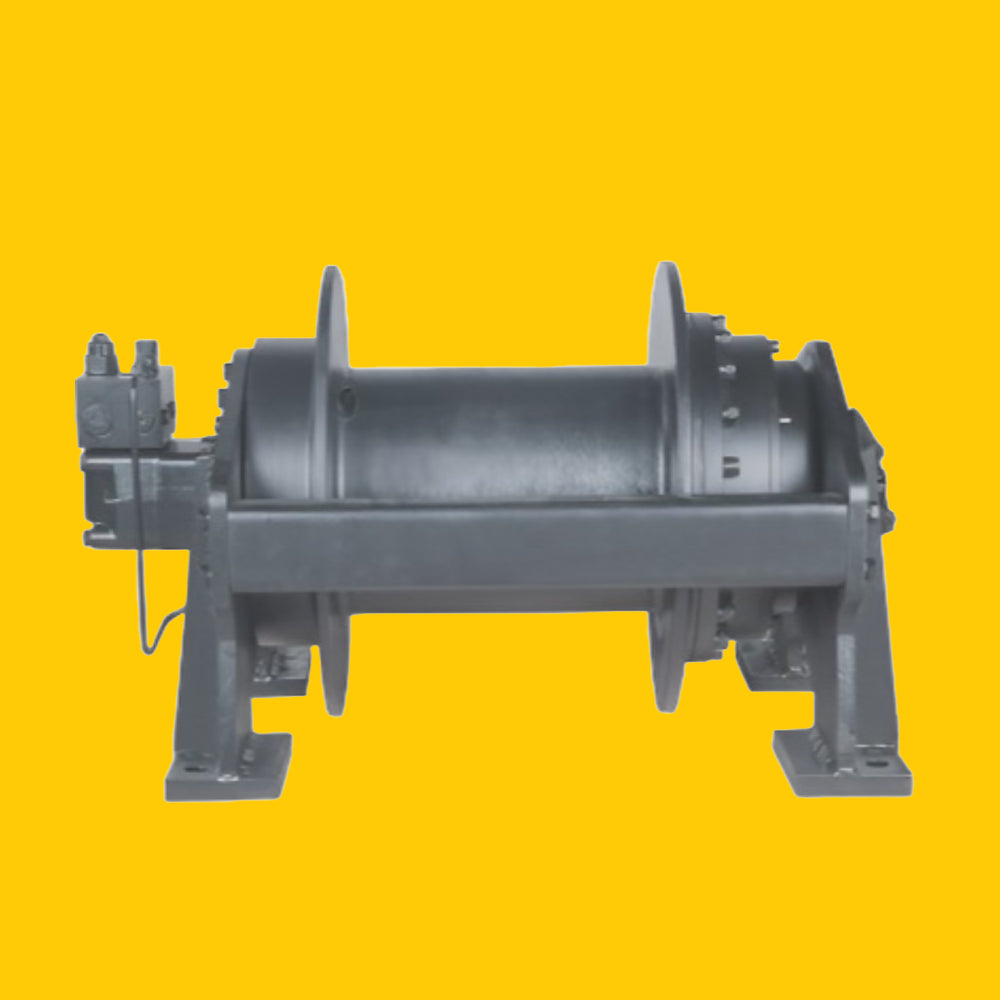
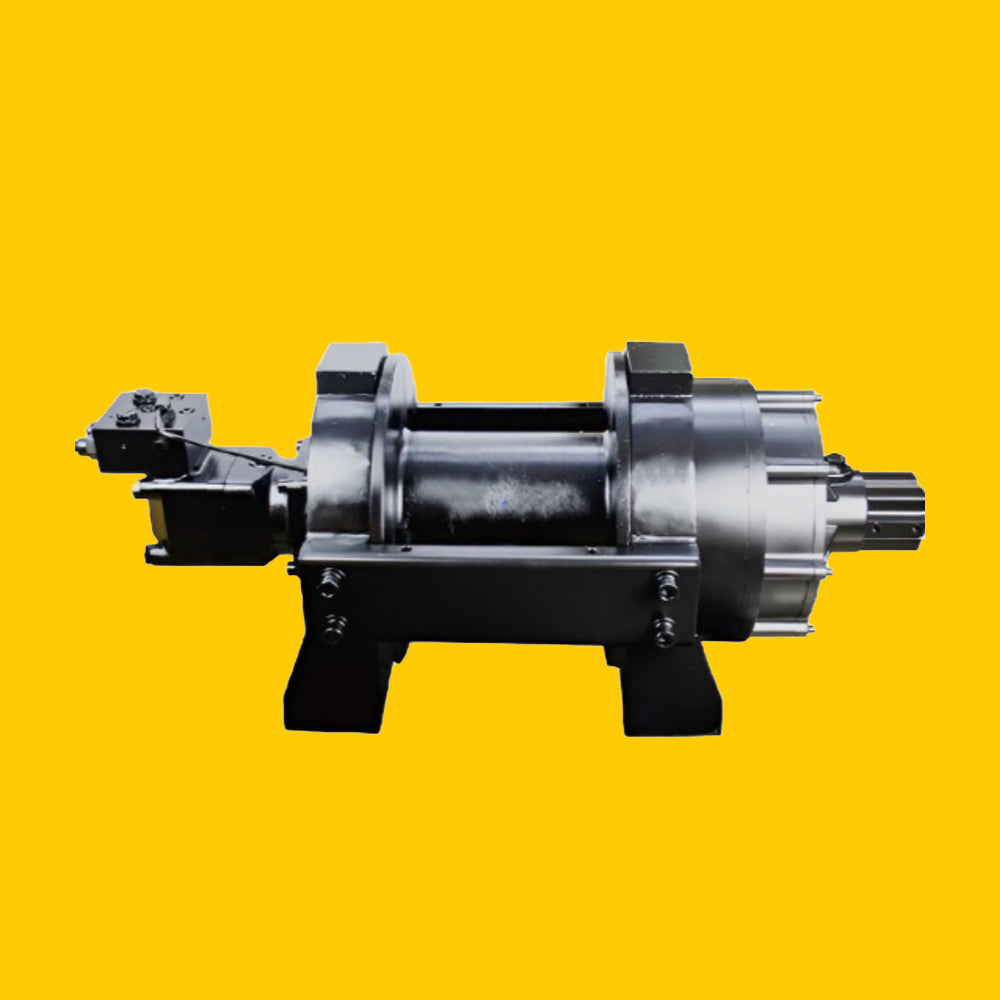
The Novawinch NVT18000 and HEN18000 provide a useful example because both have approximately the same headline first-layer pulling capacity.
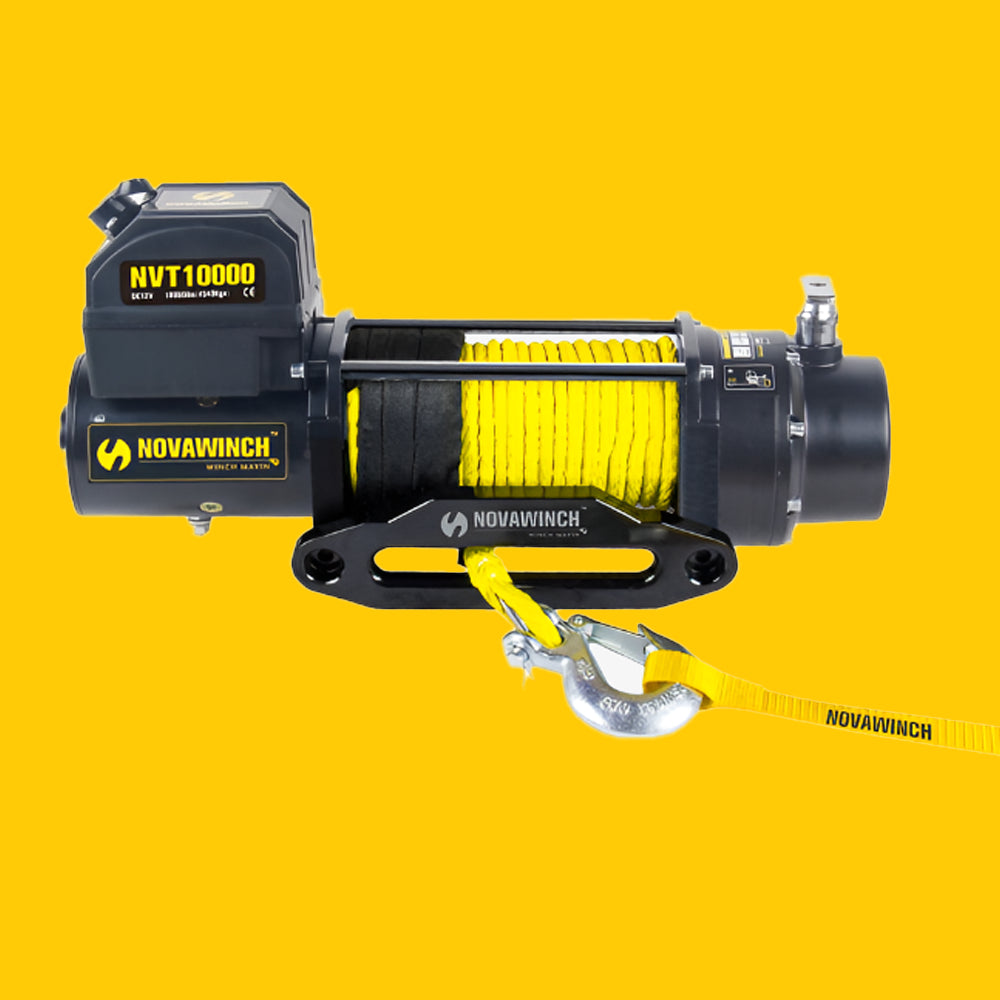
The NVT18000 is a 24V electric winch rated at 18,000lb (8,172kg). It uses a 6.2kW permanent-magnet motor and draws approximately 220A at its rated first-layer load, where published line speed is 1.7m/min.
The HEN18000 is hydraulic and has an 18,000lb (8,165kg) first-layer rating. At a 60L/min oil supply, its published first-layer line speed is 7.0m/min, with a working pressure differential of 2,320psi (16MPa).
These figures shouldn't be interpreted as proving that every hydraulic winch is faster than every electric winch. They are two specific winches with different motors, gearing and designs.
They do, however, demonstrate why headline pulling capacity alone doesn't tell you how two recovery winches will behave in service.
Two winches can both say 18,000lb on the specification sheet while having very different power requirements and operating characteristics.
Electric vs Hydraulic Recovery Winch: Quick Comparison
When Is an Electric Winch the Better Choice?
Electric winches are particularly attractive when simplicity is important and winching is relatively intermittent.
A 24V electric winch doesn't require the truck to have a hydraulic pump, reservoir, control valves and associated pipework. If the recovery vehicle already has an appropriately specified 24V electrical system, installation can therefore be considerably more straightforward.
This makes electric particularly suitable for flatbeds and transporters where the winch is primarily used to load vehicles onto the bed.
A recovery operator might pay out the rope, pull a vehicle onto the truck for several minutes and then not use the winch again for some time. That operating pattern gives the electrical system and winch time between pulls.
Electric can also be a practical choice for roadside recovery vehicles where winching forms only one part of the truck's workload and prolonged high-load pulls are uncommon.
When Is a Hydraulic Winch the Better Choice?
Hydraulic winches become increasingly attractive when winching is a frequent and substantial part of the truck's daily work.
Rather than drawing very high current from the batteries, the winch motor receives pressurised hydraulic oil from the vehicle's hydraulic system. When correctly specified, this arrangement is well suited to repeated and longer-duration operation.
This is particularly relevant for busy professional recovery vehicles, heavy wreckers and specialist trucks where the winch may be expected to work hard throughout a shift.
The important phrase is correctly specified.
A hydraulic winch is not automatically capable of unlimited continuous operation. Hydraulic systems generate heat too, and performance depends on oil flow, pressure, reservoir capacity, filtration, hose sizing, cooling and the capabilities of the pump or PTO system.
Hydraulic removes the dependence on a high-current electrical motor, but replaces it with a different set of engineering requirements.
Duty Cycle Is One of the Biggest Differences
Pulling capacity tells you how much force a winch can produce. It doesn't tell you how long the winch can sustain demanding operation.
This distinction is particularly important for recovery operators.
Electric winches can draw hundreds of amps under substantial load. As current passes through the motor, cables, contactor and connections, heat is generated. Battery state of charge also falls during operation and the charging system then needs to replace that energy.
For short and intermittent pulls, this may present no problem at all.
As the frequency and duration of winching increase, however, the electrical system becomes a more significant limitation.
A properly designed hydraulic installation can be better suited to sustained professional use because power is supplied mechanically through the hydraulic system while the vehicle engine is running. Heat still needs to be controlled, but the system can be designed around the expected operating duty.
For a busy recovery operator, this difference may matter more than a small difference in headline pulling capacity.
What Happens to an Electric Winch During a Long Pull?
As an electric winch operates under load, the motor and electrical components generate heat.
The heavier the load, the greater the electrical demand is likely to be. For example, the Novawinch NVT18000 draws approximately 55A at no load but around 220A at its rated 18,000lb first-layer load.
Repeated high-current pulls can therefore place considerable demand on the truck's batteries and charging system.
The motor also cannot be treated as though it can operate indefinitely at maximum load. Appropriate operating periods and cooling intervals need to be observed according to the winch manufacturer's requirements.
This is why the number of recoveries performed each day can be just as important as the weight of the vehicles being recovered.
Can a Hydraulic Winch Run Continuously?
Hydraulic winches are generally much better suited to sustained operation, but "hydraulic" should not be interpreted as "unlimited".
The hydraulic motor, oil and other components still generate heat. If the system cannot dissipate that heat effectively, oil temperature can rise and performance can suffer.
Reservoir capacity, oil condition, filtration and cooling therefore become important on heavily used systems.
The pump or PTO also needs to provide the required flow and pressure within its operating limits.
A hydraulic winch designed into a professional recovery truck can provide excellent sustained performance, but only when the complete hydraulic circuit has been designed for the job.
Electric Winches: Think in Amps
When specifying an electric recovery winch, one of the most important numbers after line pull is current draw.
Large 24V winches can require substantial current under load. That means the truck needs appropriate batteries, charging capacity, electrical cables, isolators, contactors and connections.
Voltage drop also matters.
An undersized cable or poor electrical connection introduces resistance. When hundreds of amps pass through that resistance, voltage is lost and heat is generated.
This can result in slower winch performance and excessive heating even if the winch itself is operating correctly.
A professional electric installation should therefore be designed around the winch's actual current requirements rather than simply connecting the winch to whatever battery cables happen to be available.
For more detail, see our guide to 12V vs 24V Winches for Recovery Trucks.
Hydraulic Winches: Think in Pressure and Flow
With a hydraulic winch, the key numbers change.
Instead of voltage and current, you need to consider hydraulic pressure and oil flow.
In simplified terms, hydraulic pressure is closely related to the torque the motor can produce, while oil flow has a major influence on how quickly the hydraulic motor turns and therefore the winch's line speed.
The Novawinch HEN18000, for example, specifies a 60L/min oil supply, with a recommended range of 35–75L/min, and a working pressure differential of 2,320psi (16MPa).
Move up to the HEN25000 and the specified oil supply becomes 70L/min, with a recommended range of 35–90L/min and a working pressure differential of 2,465psi (17MPa).
This is why you can't simply choose a hydraulic winch based on pulling capacity and connect it to any available hydraulic circuit.
The truck has to be capable of supplying what the winch requires.
Does More Hydraulic Flow Give You More Pulling Power?
Not in the way many people assume.
Increasing hydraulic flow primarily affects motor speed and therefore winch line speed. The relationship between hydraulic pressure, motor displacement and available torque is more important when considering pulling force.
That doesn't mean you should increase pressure beyond the winch specification in an attempt to create more pulling power.
The winch and hydraulic system have specified operating limits, and relief protection needs to be correctly configured.
Likewise, supplying excessive flow can cause the motor to operate outside its intended speed range.
The objective is not to give the winch "as much pressure and flow as possible". It is to provide the correct pressure and flow for the selected winch.
Which Has the Better Line Speed?
There is no universal answer.
Line speed depends on the individual winch design, motor, gearing, drum diameter, load and, in a hydraulic system, available oil flow.
This is why comparing only headline capacities can be misleading.
Using the two 18,000lb Novawinch examples, the NVT18000 electric winch has a published first-layer line speed of 1.7m/min at its 18,000lb rated load.
The HEN18000 hydraulic winch has a published first-layer line speed of 7.0m/min at its 18,000lb rated load with the specified 60L/min oil supply.
That is a substantial difference between those particular models.
It should not be generalised into a rule that hydraulic winches are always a certain amount faster than electric winches. Instead, it demonstrates why professional buyers should compare line speed under load, rather than simply comparing rated line pull or no-load speed.
Line Speed Changes as the Drum Fills
Power source doesn't remove the basic mechanical effect of drum layers.
As rope builds up on the drum, the effective drum radius increases. Available line pull falls while line speed generally increases.
For example, the HEN18000 produces a published 18,000lb line pull and 7.0m/min line speed on its first layer. By the fourth layer, published line pull has fallen to 11,250lb while line speed has increased to 11.2m/min.
That means a hydraulic winch with an 18,000lb headline rating doesn't provide 18,000lb throughout its entire rope capacity.
The same mechanical principle applies to electric winches.
For a detailed explanation, see Winch Line Pull Explained: Why Your Winch Loses Pulling Power as the Drum Fills.
Which Is Easier to Install?
In most cases, electric.
A typical electric installation requires the winch and mounting structure, suitably specified power cables, electrical protection and isolation, controls and connections to the vehicle electrical system.
That can still be a substantial installation, particularly on a high-current professional recovery winch, but the number of supporting systems is relatively limited.
A hydraulic installation may require a PTO or other hydraulic power source, pump, oil reservoir, control valve, relief protection, filtration, hoses, fittings and potentially additional cooling.
The hydraulic circuit also needs to deliver the required pressure and flow while remaining within the operating limits of the winch and other components.
If a recovery truck already has a suitable hydraulic system, the difference may be less significant. If you're converting a vehicle with no appropriate hydraulic supply, installing hydraulic purely to operate the winch can considerably increase the complexity of the build.
Which Is Easier to Maintain?
Electric and hydraulic winches have different maintenance requirements rather than one being universally maintenance-free.
An electric system requires inspection of batteries, cables, terminals, isolators, contactors, controls and electrical connections as well as the winch itself. Corrosion, loose connections and damaged cables can all affect performance.
A hydraulic system introduces hoses, fittings, seals, hydraulic oil, filters, valves, reservoir and pump components that also need inspection and maintenance.
Hydraulic leaks are another consideration. A damaged hose or fitting can disable the system and create contamination and safety concerns.
Whichever system you choose, the winch should form part of the recovery truck's planned inspection and maintenance regime.
What Happens if the Recovery Truck's Engine Is Switched Off?
This is another practical difference.
An electric winch draws energy from the batteries, so it can potentially operate with the engine stopped for a limited period, depending on the vehicle, battery condition, winch load and installation.
That does not mean heavy winching with the engine switched off is good practice. A large electric recovery winch can rapidly consume stored battery energy.
A PTO-driven hydraulic winch normally relies on the engine running to drive the hydraulic pump. If the engine stops, the hydraulic power source stops as well.
Whether this difference matters depends on the recovery vehicle and its operating procedures, but it is worth considering when designing the complete system.
Which Is Better for a Flatbed Recovery Truck?
For a flatbed primarily loading cars and light commercial vehicles, a properly specified 24V electric winch is often the simpler solution.
The pulls are typically relatively short and separated by periods when the winch isn't operating. The truck may therefore gain little from the additional complexity of a complete hydraulic installation purely for winching.
Heavy-duty 24V electric winches can also provide substantial pulling capacity. Novawinch's current PRO MAX range, for example, includes 24V models from 14,500lb to 18,500lb.
The key is making sure the electrical system, winch capacity and mounting arrangement are correctly specified for the vehicles being loaded.
Which Is Better for a Busy Recovery Truck?
As winch use becomes more frequent, hydraulic becomes increasingly attractive.
A busy recovery vehicle may perform numerous pulls throughout a shift and encounter casualties with considerably greater rolling resistance than a normal vehicle being loaded onto a transporter.
In this environment, the ability to design the winch around a vehicle-driven hydraulic power source can provide advantages over repeatedly drawing very high current from the batteries.
That doesn't mean every professional recovery truck needs hydraulic.
A properly specified 24V electric winch may still be entirely suitable if the actual pulls are short and the electrical system can comfortably support the workload.
The decision should be based on how the truck is used, not simply whether it is described as a professional recovery vehicle.
Which Is Better for Heavy Recovery?
Hydraulic is generally the more appropriate starting point as recovery loads and duty requirements increase.
Heavy wreckers and specialist recovery vehicles may need substantially greater pulling capacities, longer operating periods and winches integrated into more complex recovery systems.
Hydraulic systems also scale into capacities beyond those commonly offered by vehicle-mounted electric winches.
For example, the Novawinch HEN25000 provides a 25,000lb (11,340kg) first-layer line pull, while larger hydraulic options extend further for specialist applications.
At this level, however, choosing the winch should be treated as an engineering decision involving the truck's hydraulic supply, chassis and mounting structure, rope capacity, rigging arrangement and intended recovery work.
Is Hydraulic Always Better for Professional Recovery?
No.
Installing a hydraulic system that a truck doesn't need simply adds complexity, weight, components and maintenance.
If the recovery truck performs short loading pulls and already has a capable 24V electrical system, a quality electric winch may be the more practical choice.
Likewise, choosing electric purely because installation is easier can be a false economy if the winch will spend its working life performing repeated demanding recoveries at high load.
The best solution is the one that comfortably handles the actual operating duty.
Questions to Ask Before Choosing Electric or Hydraulic
Before deciding, establish:
- What vehicles will the truck recover?
- What is the maximum realistic pulling requirement?
- How many times is the winch likely to operate each day?
- How long will a typical pull last?
- Are recoveries mainly straightforward flatbed loading or more demanding roadside work?
- Does the truck already have a suitable 24V electrical system?
- What battery and charging capacity is available?
- Does the truck already have a suitable PTO and hydraulic system?
- What hydraulic pressure and flow are available?
- What line speed is required under load?
- How much rope capacity is required?
- What mounting space is available?
- How will the complete system be maintained?
Answering those questions usually makes the electric-versus-hydraulic decision considerably clearer.
Electric vs Hydraulic: Which Should You Choose?
For flatbeds, transporters and recovery trucks performing relatively short, intermittent pulls, a properly specified 24V electric winch can provide an excellent combination of pulling capacity, straightforward installation and practical operation.
For busy professional recovery trucks performing frequent or sustained winching, hydraulic becomes increasingly attractive because the winch can draw its power from a correctly engineered vehicle hydraulic system rather than repeatedly placing a very high current demand on the batteries.
For heavy recovery and specialist vehicles, hydraulic will generally be the more appropriate starting point because of the greater capacities and operating demands involved.
Neither system wins simply because of how it is powered.
The correct recovery winch is the one that provides the required pulling capacity and line speed while comfortably handling the truck's realistic working duty.
Choosing a Novawinch Electric or Hydraulic Recovery Winch
Novawinch offers both 24V electric and hydraulic winches for professional recovery applications.
The 24V electric range includes models for recovery trucks, flatbeds and commercial vehicles, with the PRO MAX Series extending from 14,500lb to 18,500lb. Larger-frame electric models such as the NVT18000 provide another option where substantial pulling capacity is required from a 24V platform.
For more frequent and demanding applications, the HEN hydraulic range includes professional recovery winches such as the HEN18000 and HEN25000, with higher-capacity options available for heavier recovery work.
Don't choose between them from headline capacity alone.
Consider the truck's existing systems, required line pull, line speed under load, daily operating frequency and expected duration of each recovery. Those factors will tell you far more about which winch is appropriate than whether "electric" or "hydraulic" sounds more heavy-duty.
For the wider selection process, see our Complete UK Buyer's Guide to Recovery Truck Winches.