%20(1).jpg)
.jpg)


%20(1).jpg)




What Size Winch Do I Need for a Recovery Truck?
Choosing the correct winch for a recovery truck isn't simply a case of matching the winch capacity to the weight of the vehicle being recovered.
A 2,000kg car that rolls freely up a shallow recovery bed requires far less pulling force than the same vehicle with locked wheels, accident damage or a position on a steep or difficult surface.
For professional recovery operators, choosing the right winch means considering the vehicles you expect to recover, the type of recovery work you carry out, the angle of pull, the number of rope layers on the drum and whether an electric or hydraulic system is better suited to the vehicle.
In this guide, we'll explain the main factors that determine the winch capacity you need and why the number printed on the winch is only part of the story.
Winch Capacity Is Not the Same as Vehicle Weight
One of the most common mistakes when choosing a recovery winch is comparing its rated pulling capacity directly with the weight of the vehicle.
A winch rated at 13,500lb, for example, has a theoretical first-layer line pull of approximately 6,123kg. That does not mean it should automatically be used to recover any vehicle weighing up to 6,123kg.
Equally, recovering a 3,500kg vehicle does not necessarily require 3,500kg of pulling force.
What matters is the resistance to movement.
A vehicle rolling freely on its tyres may require only a fraction of its total weight to move it. If the wheels are locked, the vehicle is embedded in mud, the recovery is uphill or the vehicle is badly damaged, the required pulling force can increase significantly.
This is why professional winch selection should be based on the worst realistic recovery conditions the truck is expected to encounter, rather than vehicle weight alone.
What Determines How Much Winch Pull You Need?
Several factors affect the load placed on a recovery winch.
1. The Weight of the Vehicle Being Recovered
Vehicle weight is the starting point.
A recovery truck dealing primarily with small cars has very different requirements from a vehicle regularly recovering vans, 4x4s, commercial vehicles or plant.
However, weight alone doesn't tell us how difficult that vehicle will be to move.
2. Whether the Vehicle Can Roll
This can make a major difference.
A roadworthy vehicle with four freely rotating wheels creates relatively little rolling resistance.
A damaged vehicle may have:
- Locked wheels
- Collapsed suspension
- Damaged steering
- Flat tyres
- A wheel missing
- Bodywork dragging on the ground
- Accident damage preventing the wheels from rotating
In these situations, the winch may effectively be dragging part or all of the vehicle rather than simply rolling it.
The required pulling force can therefore be considerably higher.
3. The Gradient
Pulling a vehicle along level ground and pulling it up a recovery bed are two different jobs.
As the gradient increases, the winch has to overcome both rolling resistance and a greater proportion of the vehicle's weight.
This becomes particularly important with steep loading angles and heavier vehicles.
A tilting or sliding recovery bed can reduce the loading angle considerably, which is one reason the design of the recovery body needs to be considered alongside winch capacity.
4. The Surface
The surface beneath the casualty vehicle can dramatically change the required pulling force.
A vehicle rolling on:
- Smooth concrete
- Tarmac
- Gravel
- Grass
- Soft ground
- Mud
will create very different levels of resistance.
A vehicle that is partially embedded in soft ground can require substantially more force to move than the same vehicle sitting on a hard, level surface.
For recovery operators who carry out more than straightforward roadside loading, this additional resistance needs to be taken into account when specifying the winch.
A Practical Starting Point for Recovery Truck Winch Sizes
There is no single winch capacity that is correct for every recovery truck. The table below should therefore be treated as a general starting point rather than a definitive specification.
The correct installation should always be determined by the intended recovery application, winch manufacturer's specifications, recovery body design and the maximum loads the system is engineered to handle.
The figures above deliberately aren't based purely on the gross vehicle weight of the recovery truck. The recovery vehicle's GVW does not tell you how much pulling force will be required at the winch.
For example, a 7.5-tonne recovery truck does not automatically need a 7.5-tonne winch. The important question is what the truck will be recovering and under what conditions.
For straightforward loading of freely rolling cars onto a slidebed, the required force can be relatively modest. A truck expected to handle damaged commercial vehicles in difficult conditions requires considerably more reserve capacity.
Why the First Layer of Rope Matters
This is one of the most important specifications to understand when comparing recovery winches.
The maximum pulling capacity quoted for a winch is normally associated with the first layer of rope on the drum.
As additional layers of rope build up, the effective diameter of the drum increases. The winch gains line speed, but the available pulling force decreases.
This means an 18,000lb winch does not necessarily provide 18,000lb of line pull when most of the rope is wound onto the drum.
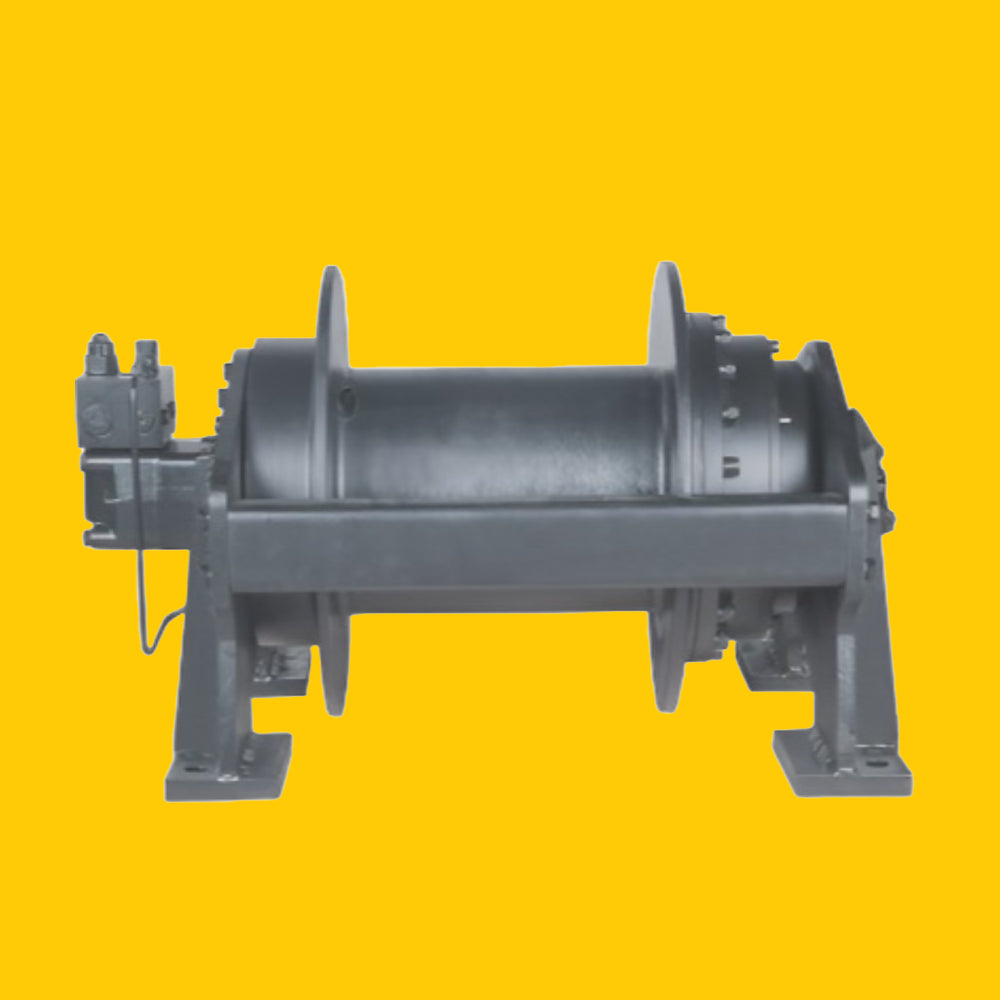
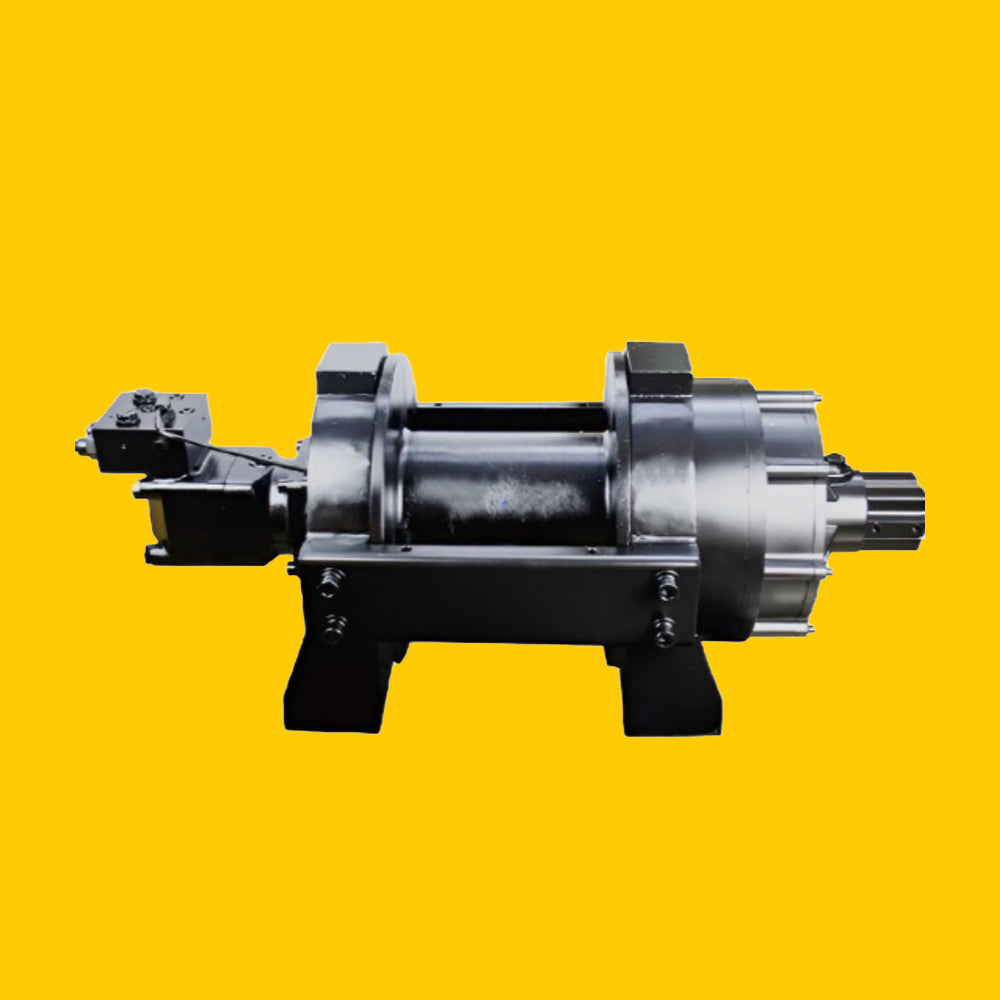
For example, the Novawinch HEN18000 hydraulic recovery winch is rated at:
Layer 1: 18,000lb / 8,165kg
Layer 2: 15,000lb / 6,804kg
Layer 3: 12,857lb / 5,832kg
Layer 4: 11,250lb / 5,103kg
In other words, by the fourth layer, the available rated line pull is substantially lower than the headline 18,000lb figure.
This is not unique to this model. It is a fundamental characteristic of drum winches.
For professional recovery operators, performance by rope layer can therefore be more useful than comparing headline capacities alone.
It is particularly relevant when a recovery truck regularly performs short pulls with much of the rope remaining on the drum.
Why More Rope on the Drum Can Mean Less Pulling Power
Imagine using a socket wrench.
Applying force close to the centre requires less torque than applying the same force at a greater radius.
A winch drum works on the same basic mechanical principle, but in reverse.
With the first layer of rope wrapped tightly around the drum, the effective drum radius is relatively small. As more rope is wound onto the drum, that radius increases.
The motor or hydraulic system is now effectively turning a larger drum.
The result is:
More rope on the drum = higher line speed but lower available line pull.
This is why looking only at the headline capacity can be misleading when specifying a winch for commercial recovery.
Should You Simply Buy the Biggest Winch Possible?
Not necessarily.
Installing a dramatically oversized winch isn't automatically better.
A larger winch can mean:
- More weight
- Greater electrical demand
- Larger cables and electrical components
- Greater hydraulic requirements
- More mounting space
- Higher purchase cost
- Greater loads transferred into the recovery body and mounting structure
The entire installation needs to be designed for the forces the winch can generate.
There is little benefit in fitting an extremely powerful winch if the mounting structure, recovery body, electrical system or hydraulic system isn't designed to support it.
The aim is therefore not to install the biggest winch available.
It is to install a winch with sufficient capacity and appropriate reserve for the work the vehicle is designed to perform.
Electric or Hydraulic Winch for a Recovery Truck?
Once you've established the capacity required, the next decision is usually between electric and hydraulic power.
Both can be suitable for professional vehicle recovery, but they have different strengths.
Electric Recovery Winches
Electric winches are relatively straightforward to install and don't require a hydraulic power source.
For commercial recovery vehicles, 24V electric winches are particularly common because many trucks already operate on a 24V electrical system.
Modern heavy-duty 24V winches are available with substantial pulling capacities. For example, the Novawinch PRO MAX range includes 24V electric winches from 14,500lb to 18,500lb.
Electric winches can be a good option for:
- Car transporters
- Tilt-and-slide recovery trucks
- Flatbed recovery vehicles
- Intermittent recovery work
- Vehicles without a suitable hydraulic system
However, high-capacity electric winches can draw considerable current under load. Battery capacity, alternator output, cabling, isolation and the overall electrical installation therefore need to be properly specified.
Hydraulic Recovery Winches
Hydraulic winches are commonly used where high pulling capacity and sustained operation are required.
Rather than drawing their power directly from the vehicle's batteries, they use pressurised hydraulic oil to drive the winch motor.
They are particularly suited to:
- Heavy recovery trucks
- High-duty-cycle applications
- Commercial and industrial recovery
- Vehicles already equipped with a hydraulic system or PTO
- Higher-capacity installations
Novawinch hydraulic recovery winches, for example, range from smaller commercial units through to heavy-duty models with first-layer capacities of 20,000lb, 25,000lb, 30,000lb and beyond.
However, selecting a hydraulic winch also requires the hydraulic system to provide the correct oil flow and working pressure.
A hydraulic winch should therefore be selected as part of the complete hydraulic installation rather than simply on line-pull capacity.
12V or 24V for an Electric Recovery Winch?
For an electric winch, voltage is another important consideration.
Smaller transporters and light commercial vehicles may use 12V electrical systems, while larger recovery trucks commonly use 24V.
As winch capacity increases, the electrical demands become significant. For this reason, many commercial recovery winches are designed specifically for 24V operation.
The winch should normally be selected to match the electrical architecture of the vehicle rather than trying to convert between systems unnecessarily.
For operators running professional recovery trucks, a purpose-designed 24V winch installation can offer a cleaner solution for high-capacity electric recovery.
Don't Forget the Winch Mounting Structure
The winch itself is only one component of the recovery system.
The forces generated by the winch have to travel through:
Winch → mounting plate → recovery body/subframe → vehicle structure
Every component in that load path needs to be suitable for the forces involved.
This becomes even more important if snatch blocks or redirected pulls are used, because anchor points and mounting structures can experience substantial loads depending on the rigging configuration.
A high-capacity winch should never simply be bolted to a structure that hasn't been designed to accept its rated loads.
Always follow the winch manufacturer's installation requirements and the requirements of the recovery body or vehicle manufacturer.
What About Using a Snatch Block?
A snatch block or suitable recovery pulley can be used to change the direction of a pull or create a multi-line rigging arrangement.
A correctly configured double-line pull can provide additional mechanical advantage and reduce the load seen at the winch line.
However, that does not mean every component in the system suddenly experiences half the load.
The forces acting on the pulley, anchor points and recovery structure depend on the rigging arrangement and the angle between the lines.
All equipment used in the recovery system must therefore have an appropriate rating for the loads it may experience.
Snatch blocks are extremely useful recovery tools, but they should be treated as part of the overall engineered recovery system rather than as a way to compensate for an inadequately specified winch.
Wire Rope or Synthetic Rope?
Winch capacity isn't the only decision to make when specifying a recovery winch.
You'll also need to choose between steel wire rope and synthetic rope.
Steel Wire Rope
Steel wire rope is highly resistant to abrasion and has traditionally been widely used in commercial and industrial recovery applications.
It can be a good choice where the rope may regularly encounter abrasive surfaces or harsh working environments.
However, steel rope is heavier, can develop broken wires and requires careful handling and inspection.
Synthetic Winch Rope
Synthetic rope is considerably lighter and easier to handle. It doesn't develop the sharp wire splinters associated with damaged steel cable and can make handling long lengths of rope easier for operators.
It does, however, need protection from abrasion, contamination, excessive heat and inappropriate contact with rough surfaces.
The correct choice depends on the recovery environment and how the equipment will actually be used.
EN-Rated Winches for Professional Recovery
Professional recovery operators should also consider whether their application requires equipment designed and certified to an appropriate standard.
Novawinch offers EN-rated electric and hydraulic winches specifically intended for professional commercial recovery and industrial applications.
These include electric models such as the 24V EN6100, with a 13,500lb first-layer line pull, as well as hydraulic recovery winches covering a wide range of capacities.
For commercial installations, winch selection should consider not only pulling capacity but also braking, controls, environmental protection, installation requirements and any applicable standards or regulatory obligations.
If you're unsure what requirements apply to a particular vehicle or recovery operation, seek competent advice before specifying the equipment.
So, What Size Winch Should You Choose?
For straightforward car transport and light recovery work, an electric winch in approximately the 9,000–13,500lb class may provide sufficient capacity when correctly specified for the application.
For professional recovery trucks dealing with a broader range of cars, vans and damaged vehicles, operators may want to investigate higher-capacity 24V electric or hydraulic systems in the region of 13,500–18,500lb and above.
For heavier commercial recovery, higher duty cycles and more demanding operations, hydraulic winches become increasingly attractive, with capacities of 20,000lb, 25,000lb, 30,000lb and considerably higher available for specialist applications.
But these numbers should never be treated as a substitute for properly assessing the recovery vehicle and intended use.
Before choosing a winch, consider:
- What is the heaviest vehicle you're realistically going to recover?
- Will it normally be rolling or potentially badly damaged?
- What is the maximum loading or recovery gradient?
- Will you be recovering vehicles from soft ground or difficult positions?
- How much rope will typically remain on the drum during the hardest part of the pull?
- What duty cycle do you need?
- Does the recovery vehicle use a 12V or 24V electrical system?
- Is a suitable hydraulic system available?
- What is the capacity of the winch mounting structure and recovery body?
- Are there relevant equipment standards or regulatory requirements for the intended use?
Answering those questions gives you a much better basis for choosing a winch than vehicle weight alone.
Need Help Choosing a Recovery Winch?
No two recovery trucks are exactly the same.
A 3.5-tonne transporter loading cars onto a beavertail has very different requirements from a heavy recovery vehicle operating a hydraulic winch in demanding roadside conditions.
At Novawinch UK, we supply electric and hydraulic winches for professional recovery, transport and industrial applications, including 12V and 24V electric winches, EN-rated commercial recovery winches and heavy-duty hydraulic systems.
If you're unsure which winch is suitable for your recovery vehicle, contact Novawinch with details of your truck, electrical or hydraulic system and the type of vehicles you expect to recover. We can help you identify the most appropriate options for your application.
Frequently Asked Questions
What size winch do I need for a 3.5-tonne recovery truck?
There isn't a universal winch size based solely on the 3.5-tonne GVW of the recovery truck. For light vehicle transport and car recovery, winches in approximately the 9,000–12,000lb range are commonly worth considering, but the correct capacity depends on the weight and condition of the vehicles being loaded, the bed angle, rolling resistance and the winch installation.
Is a 13,500lb winch big enough for a recovery truck?
A 13,500lb winch can be suitable for many car transporter and professional recovery applications when correctly specified. Remember that the headline capacity normally represents first-layer line pull. Available pulling force reduces as rope builds up on the drum, so the complete performance data should be considered.
What size winch do I need for a 7.5-tonne recovery truck?
Don't choose a winch simply by matching it to the recovery truck's 7.5-tonne GVW. The important factors are the vehicles the truck will recover, their condition, the loading angle and the expected resistance to movement. Depending on the application, higher-capacity 24V electric or hydraulic winches may be appropriate.
Is a 12V or 24V winch better for a recovery truck?
That largely depends on the recovery vehicle's electrical system and the required winch capacity. Many larger commercial recovery vehicles use 24V systems, making a purpose-designed 24V winch a natural choice. Smaller transporters may use 12V systems. The complete electrical installation must be capable of supporting the winch under load.
Is an electric or hydraulic winch better for vehicle recovery?
Electric winches offer relatively simple installation and can be an excellent choice for car transporters, slidebeds and intermittent recovery work. Hydraulic winches are often preferred for higher-capacity and higher-duty-cycle applications, particularly where the vehicle already has a suitable hydraulic system.
Does a winch lose pulling power as the drum fills?
Yes. As rope builds up on the drum, its effective diameter increases and the available line pull decreases. This is why winch manufacturers commonly publish different line-pull figures for each rope layer. First-layer capacity should not be assumed to be available when the drum is nearly full.
Can I use a snatch block to increase winch pulling power?
A correctly rigged pulley system can provide mechanical advantage and reduce the line load required from the winch. However, the loads acting on pulleys, anchor points and other parts of the recovery system must also be considered. All components should be correctly rated and the rigging arrangement should be appropriate for the recovery.
How much bigger should a recovery winch be than the vehicle being recovered?
There isn't a single safe multiplier that applies to every professional recovery. A freely rolling vehicle on level ground may require far less pulling force than its total weight, while a damaged vehicle on a gradient or soft ground may require substantially more. Professional winch selection should consider the expected resistance to movement and operating conditions rather than relying solely on a vehicle-weight multiplier.
What does first-layer line pull mean?
First-layer line pull is the pulling force available when the rope is working on the first layer around the winch drum. Because this creates the smallest effective drum diameter, this is normally where the winch develops its greatest line pull. Pulling capacity decreases as additional rope layers build up.
Should I choose steel cable or synthetic rope for a recovery truck winch?
Both can be suitable. Steel wire rope offers excellent abrasion resistance and is widely used in commercial applications. Synthetic rope is significantly lighter and easier to handle but needs appropriate protection from abrasion, contamination and heat. The best choice depends on your working environment and recovery procedures.