%20(1).jpg)
.jpg)


%20(1).jpg)




12V vs 24V Winches: Which Should You Fit to a Recovery Truck?
If you're choosing an electric winch for a recovery truck, one of the first specifications you'll encounter is voltage. Electric recovery winches are commonly available in 12V and 24V versions, but choosing between them isn't simply a case of assuming that 24V is more powerful.
The voltage of the winch needs to match the electrical system it is designed to operate from. Most 4x4s and lighter vehicles use 12V electrical systems, while many commercial trucks and professional recovery vehicles operate on 24V. For that reason, 24V winches are particularly common on recovery trucks, flatbeds and heavier commercial vehicles.
There are also important electrical differences between the two systems. For a given amount of electrical power, increasing the voltage reduces the current required. When a large recovery winch can draw hundreds of amps under load, that difference becomes significant for cables, connections, batteries and the overall electrical installation.
This guide explains how 12V and 24V winches differ, why professional recovery vehicles commonly use 24V and what you should check before installing either system.
What's the Difference Between a 12V and 24V Winch?
The fundamental difference is the voltage at which the winch motor and its electrical components are designed to operate.
A 12V winch is designed for a nominal 12V electrical supply, while a 24V winch is designed for a nominal 24V supply. The motor, contactor or solenoid and other electrical components are selected accordingly.
This does not mean a 24V winch automatically has twice the pulling capacity of a 12V winch.
Winch pulling capacity depends on the complete design, including the motor, gearing, drum dimensions and mechanical construction. It is entirely possible to manufacture 12V and 24V versions of a winch with the same rated line pull.
The important electrical advantage of 24V becomes clearer when we look at power and current.
Why Does Voltage Matter?
Electrical power can be described using the basic relationship:
Power = Voltage × Current
Or:
P = V × I
This means that, in a simplified theoretical example, supplying 4,800 watts would require:
- 400A at 12V
- 200A at 24V
The power is the same, but the current is halved when the voltage is doubled.
Real winch motors are more complicated than this simplified calculation because efficiency, motor characteristics, voltage drop and changing load all affect actual performance. However, the basic relationship explains one of the major reasons higher-voltage electrical systems are useful on high-power commercial equipment.
A recovery winch can demand several hundred amps. Managing that current reliably requires appropriately sized cables, batteries, connections, isolators and switching equipment.
Using a 24V system can reduce the current required to deliver a given amount of electrical power compared with an equivalent 12V system.
Does a 24V Winch Draw Half the Current of a 12V Winch?
In theory, the same electrical power at twice the voltage requires half the current. In practice, you shouldn't assume that two real winches will have exactly a 2:1 difference in current draw.
The motors may have different efficiencies, windings, gearing and performance characteristics, while the actual current drawn changes considerably with winch load.
The useful principle is therefore:
For the same electrical power, a higher-voltage system requires less current.
That is more accurate than saying every 24V winch draws exactly half as many amps as every equivalent 12V winch.
This distinction matters when comparing specifications. Always use the manufacturer's actual current figures for the particular winch rather than calculating the electrical installation from a general rule of thumb.
Why Are 24V Winches Common on Recovery Trucks?
The simplest reason is that many commercial recovery vehicles already operate on 24V electrical systems.
If the truck has a 24V starting and charging system, fitting a purpose-designed 24V winch allows the winch to operate from the appropriate vehicle electrical supply without introducing an unnecessary voltage conversion system.
The lower current required for a given electrical power is also advantageous when dealing with high-power equipment. Lower current can reduce resistive losses and make it easier to manage the substantial electrical loads involved in professional winching, although cable sizing and installation quality remain critical.
This is why 24V electric winches are commonly used on:
- Recovery trucks
- Flatbed recovery vehicles
- Commercial transporters
- Heavy commercial vehicles
- Industrial plant
- Machinery with 24V electrical systems
The correct voltage should ultimately follow the vehicle's electrical architecture and the winch manufacturer's specification.
When Does a 12V Winch Make Sense?
A 12V winch makes sense when the vehicle or equipment is built around a suitable 12V electrical system.
Typical applications include 4x4s, SUVs, pickups, trailers, ATVs and other lighter vehicles and equipment. There are also high-capacity 12V winches available, so 12V shouldn't be confused with "light-duty" in every situation.
For example, professional-grade 12V winches can still produce substantial line pull. What changes is the electrical challenge of supplying a high-power motor at the lower voltage.
As power requirements increase, current demand can become considerable.
For a recovery truck already operating on 24V, there is normally little reason to introduce a separate high-current 12V system simply to run a winch when an appropriate 24V winch is available.
12V vs 24V Winch: Quick Comparison
Is a 24V Winch More Powerful Than a 12V Winch?
Not necessarily.
Voltage tells you about the electrical system the motor is designed to use. It does not, by itself, tell you the winch's pulling capacity.
If one winch is rated at 12,000lb and another at 18,000lb, the 18,000lb winch has the higher rated line pull regardless of whether either motor operates at 12V or 24V.
This is particularly easy to see with winch ranges that offer the same basic capacity in both voltages. A 12,000lb winch can be produced for both 12V and 24V electrical systems while retaining the same headline rated line pull.
When comparing winches, keep voltage and pulling capacity separate in your mind:
Voltage tells you which electrical system the winch is designed for.
Rated line pull tells you the winch's specified pulling capacity under the manufacturer's stated conditions.
You still need to consider line pull by drum layer, line speed, duty requirements and the complete winch specification.
A Real Example of Electric Winch Current Draw
To understand why the electrical installation matters, consider a heavy-duty 24V recovery winch.
The Novawinch NVT18000 has an 18,000lb (8,172kg) rated first-layer line pull and uses a 24V 6.2kW permanent-magnet motor.
At no load, the published specification shows a current draw of 55A and a first-layer line speed of 8.2m/min. At its rated 18,000lb load, current rises to approximately 220A while first-layer line speed falls to 1.7m/min.
That demonstrates two important things.
First, even at 24V, a high-capacity electric recovery winch can require hundreds of amps under heavy load.
Second, winch current isn't fixed. It increases substantially as load increases.
This is why an electric recovery winch should never be considered separately from the truck's batteries, charging system, cabling and electrical connections.
Why High Current Matters
Every conductor has electrical resistance. When large currents pass through cables and connections, resistance causes voltage drop and generates heat.
The relationship between power lost as heat and current is particularly important:
Power loss = Current² × Resistance
This means resistive losses increase with the square of the current.
If current doubles through the same resistance, the heat generated at that resistance increases by a factor of four.
That doesn't mean you can simply halve every cable size when moving from 12V to 24V. Cable sizing depends on actual winch current, cable length, allowable voltage drop, installation method and the manufacturer's requirements.
It does explain why controlling current is so important in high-power electrical systems.
Cable Size Matters on Both 12V and 24V Winches
A 24V system may reduce current for a given amount of electrical power, but it doesn't remove the need for substantial, correctly specified winch cabling.
Recovery winches should be connected using cable sized for the actual current demand and cable run. Longer cable runs can increase resistance and voltage drop, so installation layout matters as well as conductor size.
Connections are equally important. Battery terminals, isolators, earth connections, contactors, crimps and cable joints can all introduce resistance if they're undersized, damaged, loose or corroded.
A poor connection carrying hundreds of amps can become a significant source of voltage drop and heat.
For that reason, don't spend time choosing a high-performance winch and then treat its electrical installation as an afterthought.
What Happens if Voltage Drops While Winching?
Voltage drop means the motor receives less voltage than the electrical system is intended to supply.
Under heavy load, some voltage drop is unavoidable, but excessive drop can negatively affect winch performance. It can result from inadequate battery capacity, undersized cables, excessive cable length, poor connections or other weaknesses in the electrical system.
A winch that appears unusually slow under load may therefore not necessarily have a mechanical problem with the winch itself.
The electrical supply should also be investigated.
This is particularly relevant to professional recovery trucks because repeated winching places much greater demands on the system than occasionally pulling a 4x4.
What Batteries Do You Need for an Electric Recovery Winch?
There isn't one battery specification that suits every electric recovery winch.
The batteries need to be appropriate for the vehicle, winch current demand and expected operating pattern. A winch used for occasional short pulls places a very different demand on the electrical system from one performing repeated high-load recoveries throughout the day.
The vehicle's batteries act as an energy reserve during heavy winching. The alternator and charging system then replenish that energy while also supporting the vehicle's other electrical loads.
This is why looking only at alternator amperage can be misleading.
A professional electric winch installation should consider the battery bank, alternator, cabling, connections and operating duty as one complete system.
We'll explore this separately in our guide to battery and alternator sizing for recovery winches.
Does a Bigger Alternator Make a Winch More Powerful?
Not directly.
The winch motor and its mechanical design determine its performance. Installing a larger alternator doesn't increase the winch's rated line pull.
What a suitable charging system can do is help the vehicle maintain its electrical energy during repeated operation and recharge the batteries after winching.
If the existing charging system can't keep pace with the truck's electrical demand over a working day, battery state of charge can progressively fall.
For a professional recovery vehicle performing repeated electric winching, charging capacity can therefore have a major effect on practical usability even though it doesn't change the winch's rated pulling capacity.
Can You Run a 12V Winch From a 24V Truck?
You should not connect a 12V winch directly to a 24V supply unless the manufacturer has specifically designed and approved the equipment for that arrangement.
Supplying a 12V motor and electrical components with 24V can damage them and create a serious electrical hazard.
A truck with a 24V electrical system may physically use two 12V batteries connected in series, but that doesn't mean one battery should simply be used as a convenient 12V winch supply.
Doing so can create unequal loading and charging between the batteries, which is undesirable in a series battery system.
If a recovery truck operates on 24V, the straightforward approach is normally to install a winch designed for 24V operation.
Can You Use a 24V-to-12V Converter for a Winch?
For small electrical accessories, DC-DC converters are common. A high-capacity recovery winch is a very different load.
A large electric winch can demand hundreds of amps. Converting enough power to operate it would require a converter system designed for extremely high electrical loads, adding complexity, cost and additional components to the installation.
For that reason, using a converter simply to operate a high-power 12V recovery winch from a 24V truck is generally an unattractive solution when a suitable purpose-designed 24V winch is available.
Use the winch voltage appropriate for the vehicle wherever practical.
Can You Run a 24V Winch From a 12V Vehicle?
Again, the correct approach is to match the winch to the electrical system it was designed for.
A 24V winch requires an appropriate 24V supply. It should not be expected to operate correctly simply because it can physically be connected to a lower-voltage source.
Creating a separate 24V system on a 12V vehicle is possible in specialist engineered installations, but it introduces additional batteries, charging arrangements, isolation and electrical complexity.
For most applications, selecting the correct 12V winch for a 12V vehicle is the more sensible solution.
What About Trucks With Two 12V Batteries?
This is where the terminology can sometimes cause confusion.
Two batteries marked "12V" do not necessarily mean the vehicle has a 12V electrical system.
When two 12V batteries are connected in series, their voltages add together, creating a nominal 24V system. This arrangement is common on commercial vehicles.
When batteries are connected in parallel, the system remains nominally 12V while available battery capacity increases.
You therefore need to establish the actual system voltage and battery configuration rather than simply counting batteries or reading the voltage printed on an individual battery.
If you're unsure, verify the vehicle specification or have the electrical system checked before ordering the winch.
Should You Choose 12V or 24V Based on Line Pull?
No.
Choose the required pulling capacity based on the recovery work, then choose a winch designed for the appropriate vehicle electrical system.
For example, a 12,000lb 12V winch and a 12,000lb 24V winch may have the same headline rated line pull. That doesn't make their electrical requirements interchangeable.
Likewise, changing from 12V to 24V doesn't solve an undersized winch.
If the recovery requires greater pulling capacity, you need to specify the appropriate winch capacity and rigging arrangement rather than assuming a change in voltage will provide it.
For more detail on capacity selection, see What Size Winch Do I Need for a Recovery Truck?
Don't Forget About Drum Layers
Whether the winch operates at 12V or 24V, its available line pull changes as rope builds up on the drum.
Maximum rated line pull is normally specified on the first rope layer, where the effective drum radius is smallest. As additional rope layers build up, the effective radius increases and mechanical advantage decreases.
A winch advertised as 18,000lb therefore doesn't necessarily provide 18,000lb of line pull throughout the entire rope capacity.
This mechanical effect applies regardless of the electrical supply voltage.
For a detailed explanation, see Winch Line Pull Explained: Why Your Winch Loses Pulling Power as the Drum Fills.
When Should You Consider Hydraulic Instead?
There comes a point where the more useful question isn't "12V or 24V?" but whether electric is still the right power source.
A properly specified 24V electric winch can be an excellent choice for recovery trucks and flatbeds performing intermittent winching. However, repeated high-load operation places substantial demands on batteries, charging systems and electric motors.
For trucks carrying out frequent, sustained or heavier recovery work, a hydraulic winch may be more appropriate.
Hydraulic winches use pressurised oil supplied by the truck's hydraulic system rather than drawing hundreds of amps from the electrical system. They introduce their own requirements—including hydraulic flow, pressure, filtration, reservoir capacity and heat management—but can be better suited to sustained professional use.
We'll cover this decision in detail in our guide to Electric vs Hydraulic Winches for Recovery Trucks.
12V vs 24V Recovery Winch: Which Should You Choose?
For most installations, the starting point is straightforward:
If the vehicle has a suitable 12V electrical system, choose a winch designed for 12V operation.
If the recovery truck has a suitable 24V electrical system, choose a winch designed for 24V operation.
From there, make sure the winch itself is correctly specified for the recovery work.
That means considering rated line pull, drum-layer performance, line speed, rope capacity, duty requirements, environmental protection and mounting—not just voltage.
For professional recovery trucks, 24V electric winches are particularly attractive because commercial vehicles commonly already operate at 24V and the higher system voltage helps manage the current required by powerful electric equipment.
But 24V isn't a substitute for correct winch sizing, and it doesn't automatically make one winch stronger than another.
Choosing a Novawinch 12V or 24V Winch
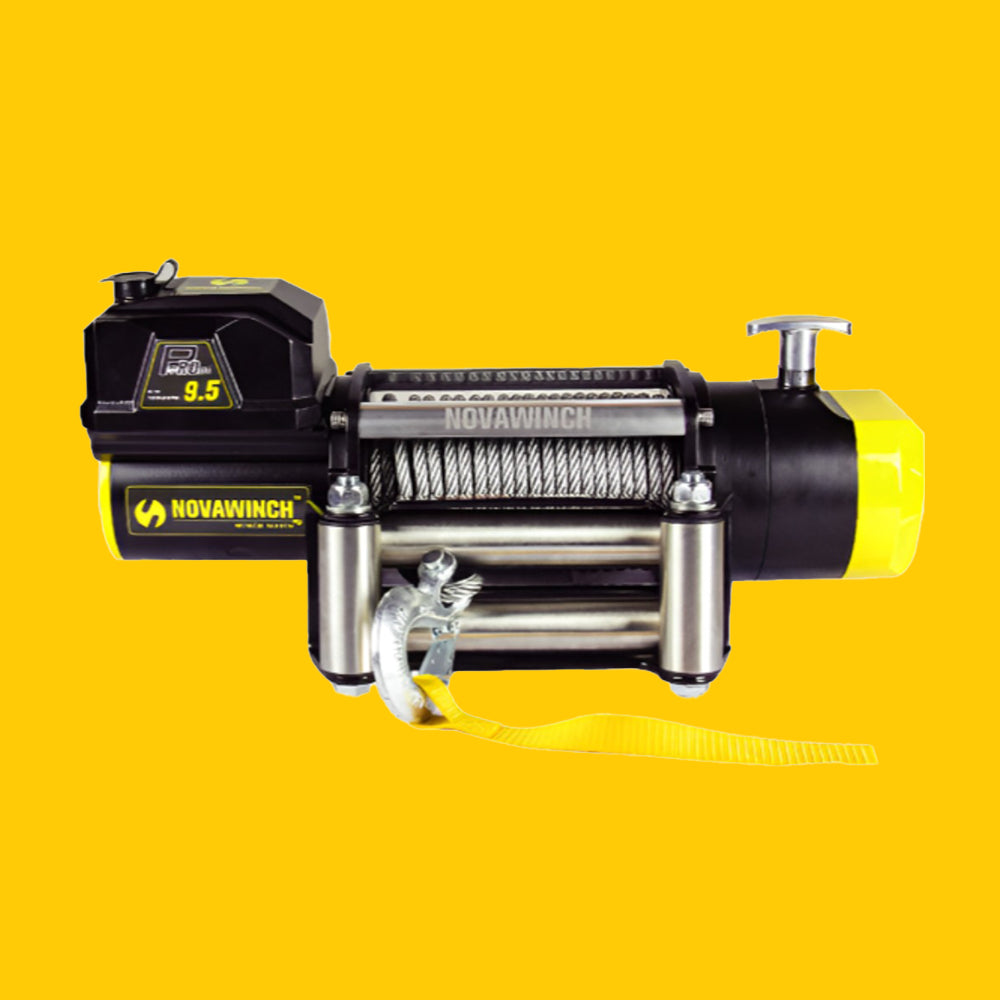
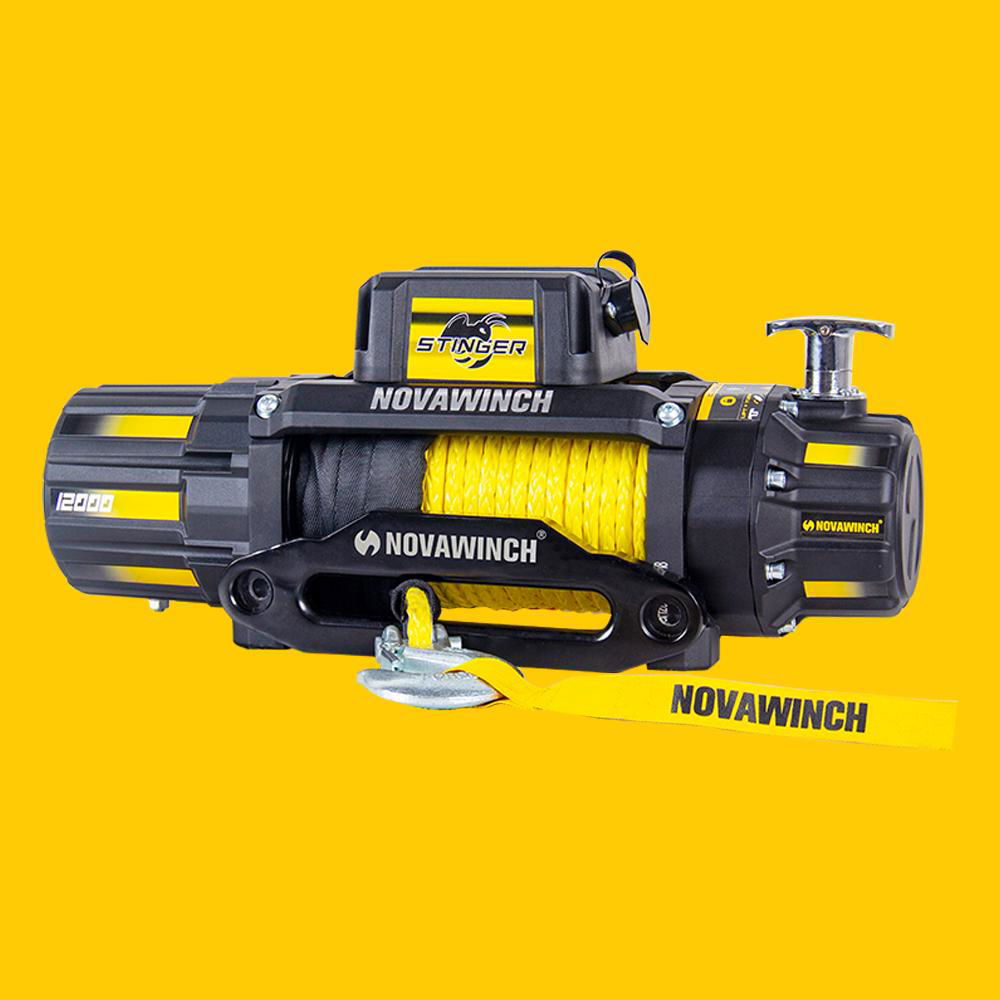
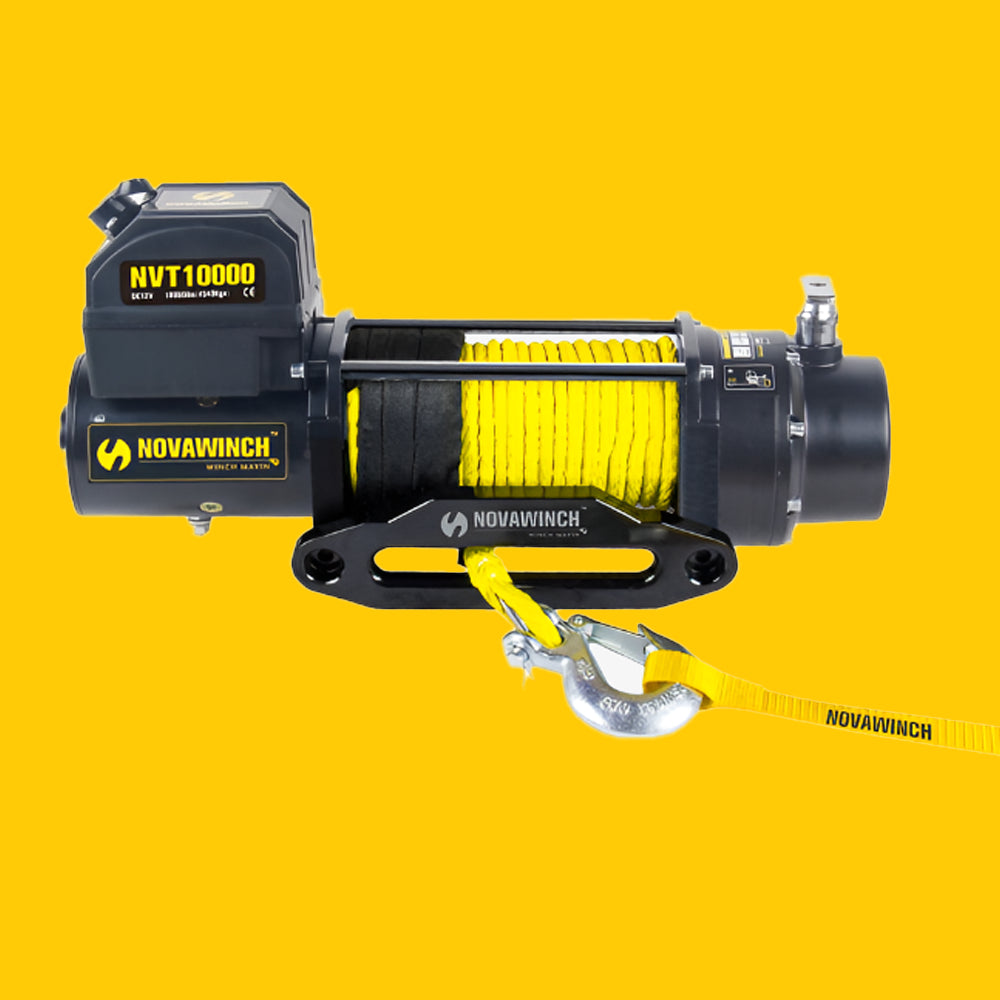
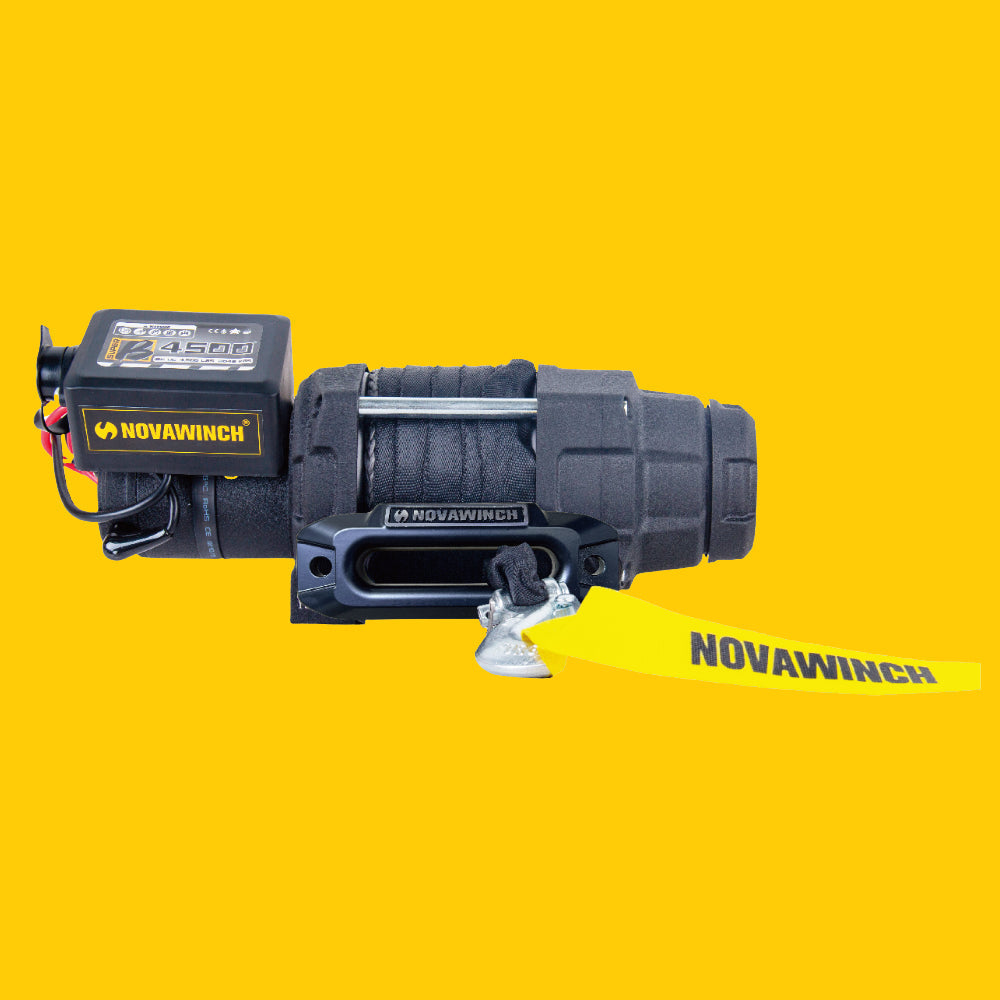
Novawinch offers electric winches across both 12V and 24V platforms.
The 12V electric winch range is particularly suited to 4x4s, pickups, trailers and other equipment operating from 12V systems, with capacities extending into heavy-duty recovery applications.
For professional recovery trucks, flatbeds and commercial vehicles, the 24V electric winch range includes heavy-duty recovery models designed around 24V vehicle systems.
The PRO PLUS and STINGER ranges also demonstrate why voltage and pulling capacity should be considered separately, with selected capacities available in both 12V and 24V configurations. For larger professional recovery applications, the PRO MAX range extends into 24V winches from 14,500lb to 18,500lb.
If you're unsure which winch is suitable for your recovery vehicle, start with the truck's electrical system, the vehicles you expect to recover and the worst realistic recovery conditions. From there, the required pulling capacity, duty and electrical specification can be narrowed down properly.
For the wider selection process, see our Complete UK Buyer's Guide to Recovery Truck Winches.