%20(1).jpg)
.jpg)


%20(1).jpg)




Winch Line Pull Explained: Why Your Winch Loses Pulling Power as the Drum Fills
An 18,000lb winch doesn't necessarily produce 18,000lb of pulling force every time you use it. Depending on how much rope is wound onto the drum, the available line pull can be considerably lower than the figure shown in the headline specification.
This is because a winch develops its maximum rated line pull when the rope is working on the first layer of the drum. As more rope winds onto the drum, its effective diameter increases and the mechanical advantage decreases.
For recovery operators, this is an important characteristic to understand. If you regularly carry out short pulls with most of the rope still on the drum, the winch may have substantially less pulling capacity available than its headline rating suggests.
In this guide, we'll explain what winch line pull means, why it changes as the drum fills, how it affects line speed and what all of this means when choosing a winch for professional vehicle recovery.
What Does Winch Line Pull Mean?
Winch line pull is the pulling force that a winch can exert through its rope or cable. You'll normally see it expressed in pounds (lb) or kilograms (kg). For example, 10,000lb is approximately 4,536kg, 18,000lb is approximately 8,165kg and 25,000lb is approximately 11,340kg.
There is, however, an important detail behind those numbers. When a winch is described as having an 18,000lb rated line pull, that figure will typically refer to its maximum rated pull under a defined condition, commonly with the rope on the first layer of the drum.
It doesn't mean that 18,000lb of pulling force is available regardless of how much rope is wound onto the drum. To understand why, we need to look at what happens as the drum fills.
What Is First-Layer Line Pull?
The first layer is the first complete layer of rope wrapped directly around the winch drum. At this point, the rope is operating at the smallest possible distance from the centre of the drum, giving the winch its greatest mechanical advantage and therefore its highest available line pull.
As the winch pulls the rope in, additional layers begin to build on top of the first. The rope is now pulling from the surface created by the rope already wrapped around the drum, increasing its effective diameter. As that diameter increases, the available line pull decreases.
This is why winch manufacturers often provide performance data for each individual drum layer rather than simply quoting one pulling capacity.
Why Does a Winch Lose Pulling Power as the Drum Fills?
The reason comes down to torque and leverage. The winch motor and gearbox produce torque at the drum, and the pulling force available at the rope depends partly on how far the rope is positioned from the centre of that drum.
In simplified terms:
Line Pull = Drum Torque ÷ Effective Drum Radius
If the torque remains the same but the effective drum radius increases, the force available at the rope decreases.
You can think about this in terms of leverage. When the rope is on the first layer, it is working very close to the centre of the drum. As more layers build up, the rope moves further away from the centre. The winch motor and gearbox are effectively turning a progressively larger drum.
The result is straightforward: a smaller effective drum diameter provides greater line pull, while a larger effective drum diameter provides less line pull.
This isn't a fault or limitation specific to one particular type of winch. It is a fundamental mechanical characteristic of drum winches.
A Real Example: An 18,000lb Recovery Winch
The easiest way to see the effect is to look at real performance data.
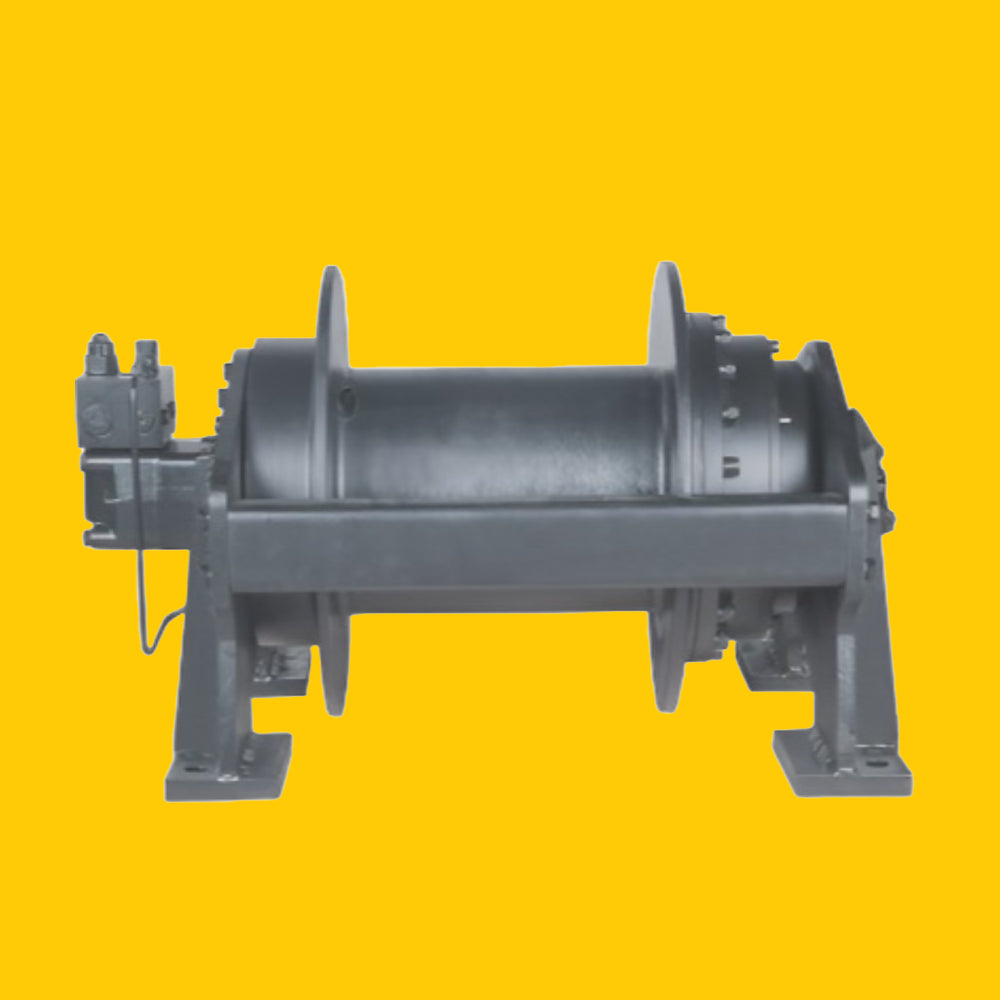
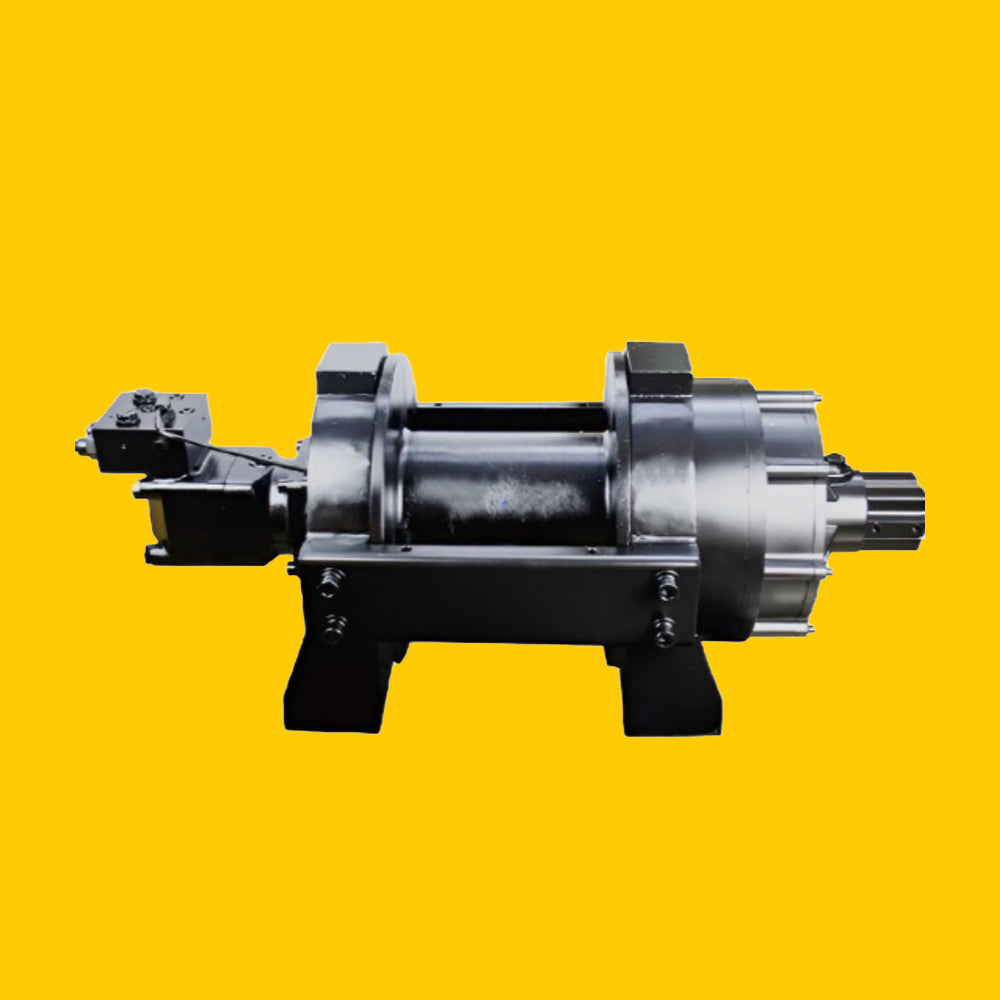
The Novawinch HEN18000 is an EN-rated hydraulic recovery winch with a maximum first-layer line pull of 18,000lb (8,165kg). It carries 30 metres of 14mm wire rope across four drum layers.
Its performance changes considerably as the rope builds up on the drum:
On the first layer, the HEN18000 is rated to pull 18,000lb (8,165kg). By the fourth layer, this has reduced to 11,250lb (5,103kg) — a 37.5% reduction in rated line pull.
At the same time, something else is happening: line speed is increasing. The HEN18000 has a rated line speed of 7.0 metres per minute on the first layer, increasing to 11.2 metres per minute on the fourth layer.
In other words, as the drum fills, pulling force decreases while line speed increases. Understanding this relationship is particularly useful when comparing winches for professional recovery work.
Why Does Line Speed Increase as Pulling Power Decreases?
The increase in line speed is caused by the same change in effective drum diameter. A larger circumference retrieves more rope with every revolution of the drum.
Imagine one complete revolution of a small wheel compared with one revolution of a much larger wheel. The larger wheel travels further because its circumference is greater. The same principle applies to the effective diameter of a winch drum.
On the inner layers, the winch has greater mechanical advantage but retrieves less rope with each drum revolution. On the outer layers, it has less mechanical advantage but retrieves more rope with each revolution.
This creates the basic relationship between line pull and line speed: inner layers provide greater pulling force at a lower line speed, while outer layers provide lower pulling force at a higher line speed.
How Much Pulling Power Can a Winch Lose?
There is no single percentage that applies to every winch. The reduction depends on factors including the drum dimensions, rope diameter, number of layers and the overall design of the winch.
Another example can be seen with the Novawinch HEN25000 hydraulic winch. It has a first-layer rated line pull of 25,000lb, reducing to 21,100lb on layer two, 18,500lb on layer three and 16,176lb on layer four.
By the fourth layer, its rated line pull is approximately 35% lower than its headline first-layer capacity.
This demonstrates why professional recovery operators should look beyond the largest number on the specification sheet. Two winches may appear similar when comparing headline capacities, but their performance across the drum layers can tell you much more about how they will perform in a particular application.
Why Drum Layers Matter on a Recovery Truck
Drum-layer performance is particularly relevant to vehicle recovery because many recoveries involve relatively short pulls.
Imagine a casualty vehicle positioned only a few metres behind a recovery truck. You connect the winch rope and begin loading the vehicle, but because only a short length of rope has been paid out, several layers remain wound onto the drum.
The winch may therefore be operating well below its maximum first-layer pulling capacity precisely when you are asking it to move the vehicle.
This can become particularly important when loading a badly damaged vehicle, pulling a vehicle with locked wheels, recovering heavier vans or commercial vehicles, working on steeper loading angles or dealing with vehicles on soft ground.
It also means that a short winching distance can sometimes put the winch in a less favourable mechanical position than a longer pull where enough rope has been paid out to reach the inner drum layers.
A 20,000lb Winch Doesn't Always Pull 20,000lb
The Novawinch HEN20000 provides another useful example. It has a first-layer rating of 20,000lb (9,072kg) and carries 62 metres of 14mm wire rope across five layers.
Its rated line pull reduces from 20,000lb on the first layer to 12,168lb on the fifth layer. That's a reduction of approximately 39% from its maximum first-layer rating.
Over the same five layers, rated line speed increases from 6.3m/min to 10.3m/min.
Again, this doesn't indicate anything unusual about the winch. It demonstrates the mechanical effect created by increasing the effective drum radius.
When comparing winches for a commercial recovery installation, knowing how much line pull is available on the outer layers can therefore be just as useful as knowing the maximum first-layer figure.
Does This Apply to Electric Winches Too?
Yes. The same fundamental principle applies to both electric and hydraulic drum winches.
An electric winch uses an electric motor and gearbox to produce torque at the drum, while a hydraulic winch uses a hydraulic motor, usually in conjunction with a gearbox. In both cases, the rope is ultimately being wound onto a rotating drum.
As the effective radius of that drum increases, the mechanical advantage available at the rope decreases.
This is why understanding drum-layer performance is useful whether you're choosing a 12V electric winch, a 24V electric winch or a hydraulic recovery winch.
Why Are Winches Advertised by Their First-Layer Capacity?
Winches are commonly classified according to their maximum rated line pull, which is why you'll see capacities such as 10,000lb, 13,500lb, 18,000lb, 20,000lb and 25,000lb used in product names and specifications.
These figures provide a useful way of comparing different classes of winch, but for a professional installation they shouldn't be considered in isolation.
Where detailed manufacturer data is available, it's worth comparing the rated line pull and line speed across the different drum layers. Rope diameter, rope capacity, drum dimensions, gear ratio and power requirements are also important.
For electric winches, this means considering factors such as current draw and the vehicle's electrical system. For hydraulic winches, the required hydraulic pressure and oil flow must also be taken into account.
The headline capacity tells you what class of winch you're looking at. The full performance specification tells you much more about how that winch will actually behave.
Does Pulling More Rope Out Increase Winch Pulling Power?
Generally, a drum winch develops greater line pull when it is operating on its inner rope layers. Paying out enough rope to reach a lower layer can therefore increase the available pulling force.
However, this doesn't mean you should simply pull out as much rope as possible every time you use the winch.
A minimum number of wraps must remain on the drum in accordance with the winch and rope manufacturer's instructions. The rope attachment point on the drum should not be treated as an anchor designed to withstand the full recovery load.
The aim is to understand how the rope position affects performance and incorporate that knowledge into safe recovery planning.
Should You Put Less Rope on a Recovery Winch?
Not automatically. Although carrying less rope may reduce the number of layers on the drum, it also reduces the distance over which the winch can be used.
A professional recovery truck needs sufficient rope to reach casualty vehicles in the situations it is designed to handle. The correct setup therefore requires a balance between rope capacity, drum dimensions, rope diameter, required line pull and typical recovery distance.
This is another reason why winch selection should be based on the actual application rather than simply choosing the highest headline capacity.
Does Rope Diameter Affect Drum-Layer Performance?
Yes. Rope diameter affects how quickly the effective drum radius increases as additional layers build up. A thicker rope creates a larger increase in radius with each layer.
However, this doesn't mean fitting thinner rope is a suitable way to increase winch performance or capacity. The rope must have the correct specification and strength for the winch and intended application.
Always follow the winch manufacturer's requirements for rope diameter, construction and capacity. An unsuitable rope should never be fitted simply to alter the number of layers on the drum.
What About Synthetic Winch Rope?
The same basic drum-layer principle applies to synthetic winch rope. As synthetic rope builds up on the drum, the effective radius increases and the mechanical advantage available at the rope decreases.
Steel wire rope and synthetic rope do, however, have different characteristics when it comes to handling, abrasion, inspection, heat and spooling. The rope should therefore be selected to suit both the winch and the recovery application.
For professional recovery equipment, the rope, fairlead, winch and mounting system should all be considered parts of the complete recovery system rather than independent components.
Can a Snatch Block Increase Available Pulling Force?
A correctly configured snatch block or recovery pulley can provide mechanical advantage and reduce the line pull required from the winch for a given recovery.
This can be particularly useful during demanding recoveries, but the complete rigging arrangement must be considered. Depending on the configuration and angles involved, substantial forces can be transferred into the pulley, anchor points, shackles and recovery structure.
All components must therefore be appropriately rated for the loads they may experience. A snatch block is a useful recovery tool, but it shouldn't be treated as a substitute for correctly specifying the winch and recovery system.
What Does This Mean When Choosing a Recovery Winch?
The main lesson is that a professional recovery winch shouldn't be selected solely by comparing headline capacities.
When comparing winches, consider:
- Whether the quoted capacity is the first-layer rating
- Rated line pull across each drum layer
- Line speed across each drum layer
- Number of rope layers on the full drum
- Rope diameter and total rope capacity
- How much rope will typically remain on the drum during a recovery
- The heaviest realistic recovery loads
- Whether damaged or non-rolling vehicles will regularly be handled
- The electrical requirements of an electric winch
- The pressure and flow requirements of a hydraulic winch
- The capacity of the winch mounting and recovery structure
Looking at these factors gives you a much better understanding of how a winch will perform in the real world.
The Headline Winch Capacity Is Only the Beginning
An 18,000lb winch is still correctly described as an 18,000lb-rated winch, but understanding where that 18,000lb of rated line pull is available is essential.
The first rope layer places the line closest to the centre of the drum, providing the greatest mechanical advantage and maximum rated line pull. As additional rope layers build up, the effective drum diameter increases, mechanical advantage decreases and available line pull falls. At the same time, line speed increases because the larger effective circumference retrieves more rope with each revolution.
For professional recovery operators, this isn't just an interesting piece of winch theory. It can directly affect the performance available during a difficult recovery.
When comparing recovery winches, look beyond the headline capacity and examine the complete performance specification.
Choosing a Winch for a Recovery Truck
Winch line pull is only one part of choosing the correct recovery winch. Vehicle weight, rolling resistance, gradients, damaged wheels, soft ground, electrical capacity, hydraulic supply, duty cycle and recovery-body design can all influence the specification required.
If you're currently choosing a winch for a recovery vehicle, read our What Size Winch Do I Need for a Recovery Truck? guide for a broader explanation of recovery winch sizing.
Novawinch UK supplies 12V and 24V electric winches alongside EN-rated hydraulic recovery winches for professional vehicle recovery, transport and industrial applications.
If you're unsure which winch is suitable for your recovery vehicle, contact Novawinch with details of your truck, the vehicles you expect to recover and your electrical or hydraulic system. We can help you identify suitable options for your application.