


Mastering Advanced Winching: 6 Techniques Using Two Snatch Blocks
Snatch blocks can make a winch recovery more controlled and versatile, but only when the complete rigging system has been planned correctly. With one or two blocks, you can redirect the rope, improve the pulling angle or create mechanical advantage for a demanding recovery.
This guide explains six practical winching configurations using up to two snatch blocks. It is intended to help experienced operators understand the principles involved—not replace the instructions supplied with your winch, pulley blocks and recovery equipment.
Before You Rig a Winch with Snatch Blocks
Every extra block changes the direction and magnitude of the forces acting on the vehicle, anchors and rigging. Before tensioning the rope, read our essential winch safety guidance and check the following:
- Rate every component correctly: The winch, rope, blocks, shackles, straps, recovery points and anchors must all be suitable for the loads they may experience.
- Inspect the complete system: Do not use damaged, distorted or badly worn equipment.
- Establish an exclusion zone: Keep everyone away from the rope, blocks, anchors and the path of either vehicle.
- Avoid shock loading: Apply tension smoothly and stop if the rigging shifts, binds or behaves unexpectedly.
- Follow the manufacturer’s instructions: Observe the specified duty cycle, minimum drum wraps and approved rigging methods.
If you need a refresher on the basic sequence, see how to use a winch safely.
What Does a Snatch Block Actually Do?
A snatch block is a pulley with an opening side plate that allows the rope to be fitted without feeding the entire length through the block. Its effect depends on where the block is attached and where the rope is terminated.
- Fixed block: A block attached to a stationary anchor mainly changes the direction of pull. It does not automatically double the force applied to the casualty.
- Moving block: A block attached to the casualty can create mechanical advantage because more than one part of the rope supports the moving load.
- Anchor loading: A redirect block can impose a high resultant load on its anchor. The load depends on rope tension and the angle between the two rope legs.
- Real-world losses: Friction, rope bends and block efficiency mean the actual mechanical advantage will be lower than the theoretical figure.
Remember that a winch’s headline rating normally applies on its first drum layer. Available pulling force reduces as the drum fills, as explained in our guide to winch line pull and drum layers.
Six Advanced Winching Techniques Using Snatch Blocks
Technique 1: Redirect the Winch Line
Attach one block to a suitable fixed anchor and route the rope through it to the casualty. This allows the winch to pull from a safer or more useful direction when a straight line is obstructed.
The block is acting as a direction change, not a force multiplier. Check the angle between the incoming and outgoing rope because both rope legs load the block and its anchor.
Technique 2: Create a Double-Line Pull
Attach a block to an approved recovery point on the casualty, pass the rope through it and return the rope end to a rated point on the recovery vehicle. The two rope legs supporting the moving block create a theoretical 2:1 mechanical advantage, minus frictional losses.
This increases force at the casualty while approximately halving rope speed and doubling the amount of rope that must be recovered for the same vehicle movement. It does not increase the safe rating of any component.
Technique 3: Redirect the Rope Around an Obstacle
Two fixed blocks can guide the rope around a tree, rock, embankment or other obstruction. This configuration can create a usable route where the winch and casualty cannot be aligned directly.
Each change of direction creates a separate anchor load. Keep the rope clear of sharp edges, avoid side-loading the blocks and confirm that the rope enters and leaves each sheave cleanly.
Technique 4: Combine Redirection with a Double-Line Pull
Use one fixed block to establish the required pulling direction and a second moving block on the casualty to create mechanical advantage. This can be useful when a stronger pull is required but the recovery vehicle cannot be positioned directly in line.
This setup is more demanding than a simple double-line pull because several anchors and connection points share different loads. Trace the complete load path before operating the winch.
Technique 5: Build a Higher Mechanical-Advantage System
With two blocks and an appropriate rope termination, an experienced operator can create a multi-part line system that provides greater theoretical mechanical advantage than a double-line pull. The exact advantage depends on how many rope parts directly support the moving load, not simply on the number of blocks used.
Higher mechanical advantage also means slower casualty movement, more rope travel and potentially very high loads at individual anchors. Calculate the forces for the exact arrangement and remain within the working limits of every component. A vehicle recovery winch should not be used for suspended lifting unless the equipment is specifically designed and certified for that purpose.
Technique 6: Use a Staged or Offset Recovery
Two blocks can help move a casualty through a planned path when a single straight pull would place it against an obstacle or unstable surface. Set up the first safe direction, move the vehicle only as far as planned, secure it and then fully de-tension the system before re-rigging for the next stage.
Do not adjust, move or disconnect loaded rigging. If the casualty, anchor or terrain begins to move unexpectedly, stop and reassess the recovery.
Video: Six Ways to Rig a Winch with Two Blocks
The following demonstration shows several possible layouts. Treat it as supporting information and check every configuration against the ratings and instructions for your own equipment.
Choosing the Right Snatch Block
Choose the block for the rope, winch and maximum load it may experience, not only the vehicle’s weight. Browse our snatch blocks and winch pulleys, and check:
- Working load limit: Use the manufacturer’s stated working rating and any application-specific safety factor.
- Rope compatibility: The sheave diameter and groove must suit the rope material and diameter. Synthetic rope and steel wire rope can have different requirements; compare them in our winch rope guide.
- Attachment method: Confirm that the eye, hook or shackle interface cannot twist, side-load or release under tension.
- Condition and movement: The sheave should rotate correctly and the side plates should close and secure as intended.
Common Snatch Block Mistakes
- Assuming every block arrangement automatically doubles pulling power.
- Rating the setup only for winch line tension and ignoring the load at redirect anchors.
- Using recovery points, straps or shackles without confirmed ratings.
- Allowing the rope to rub on the block cheek, vehicle bodywork or terrain.
- Standing inside a rope angle or close to a loaded block, hook or anchor.
- Using a recovery winch as a lifting hoist.
For more background on headline capacities and working loads, read our guide to understanding winch ratings.
Plan the Complete Recovery System
Two snatch blocks can provide useful direction control and mechanical advantage, but they also introduce more connection points and more complex anchor loads. Plan the entire load path, use compatible rated equipment and stop whenever the actual behaviour differs from the plan.
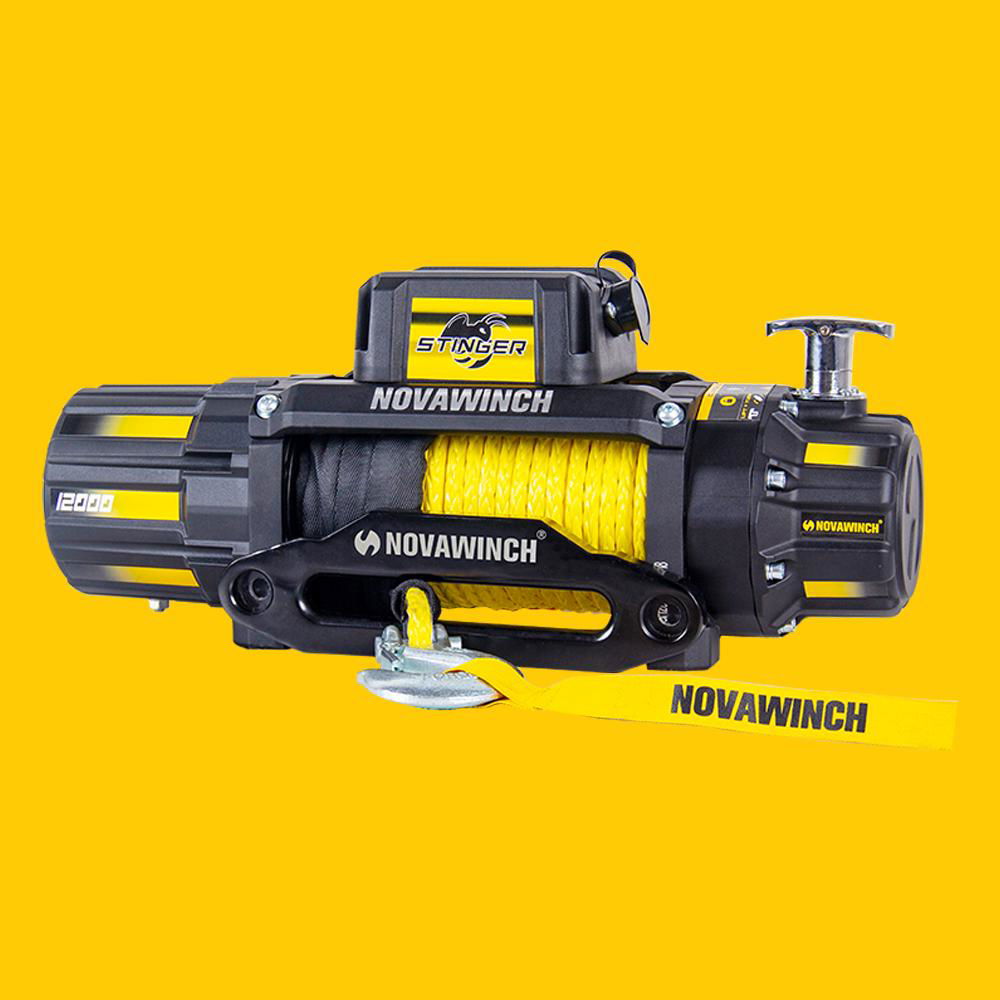
If you are preparing a 4x4 recovery setup, see our guide to using the Novawinch Stinger 12,000lb winch, or explore the STINGER Series electric winch range.