%20(1).jpg)
.jpg)


%20(1).jpg)




Synthetic Rope vs Steel Cable for Professional Vehicle Recovery
Choosing between synthetic winch rope and steel wire rope isn't simply a matter of deciding which material is stronger.
Both can be used effectively in professional vehicle recovery when correctly specified, installed, inspected and maintained. They do, however, behave very differently in service.
Synthetic rope offers major advantages in weight and handling, while steel wire rope remains well established in professional recovery and can perform well in environments where abrasion and rough working conditions are significant concerns.
For recovery operators, the better choice depends on the truck, winch, working environment, recovery techniques and how the rope will be inspected and maintained throughout its service life.
This guide compares synthetic rope and steel wire rope specifically from the perspective of professional vehicle recovery.
Synthetic Winch Rope vs Steel Cable: What's the Difference?
Steel winch cable is normally a multi-strand wire rope constructed from steel wires formed into strands around a core.
Synthetic winch rope is manufactured from high-strength synthetic fibres. Many vehicle recovery ropes use high-modulus polyethylene fibres, commonly referred to as HMPE, although the exact construction and material vary between manufacturers.
Both are designed to transmit tensile load from the winch to the casualty or rigging system.
The major differences are their weight, flexibility, response to abrasion, inspection requirements and behaviour when damaged or heavily loaded.
Neither should be selected simply because one material is perceived as universally stronger or safer.
Synthetic Rope vs Steel Cable: Quick Comparison
Is Synthetic Winch Rope Stronger Than Steel Cable?
Not as a general rule.
Both synthetic rope and steel wire rope are available in many diameters, constructions and strength ratings. Comparing the materials without comparing their actual specifications is therefore misleading.
A correctly specified synthetic rope can provide very high tensile strength for its weight, which is one of its biggest advantages. Steel wire rope can also provide extremely high strength and is available in constructions developed for demanding industrial applications.
For recovery work, the important number is not whether the rope is described as synthetic or steel.
It is whether the specific rope is correctly rated and approved for the winch and intended recovery application.
The winch manufacturer's specified rope diameter, drum capacity and installation requirements should always be considered before changing rope type.
The Biggest Advantage of Synthetic Rope: Weight
One of the clearest differences becomes obvious as soon as you handle the rope.
Synthetic winch rope is significantly lighter than an equivalent length of steel wire rope.
On a professional recovery truck carrying a long length of relatively large-diameter rope, that can remove a meaningful amount of weight from the winch assembly.
More importantly for the operator, it makes paying out rope considerably easier.
A recovery operator may need to walk the winch line from the truck to a casualty, reposition it several times during rigging or carry it across difficult ground. Reducing rope weight can make those tasks noticeably easier.
This handling advantage becomes increasingly significant as rope diameter and length increase.
Synthetic Rope Is More Flexible
Synthetic rope is also generally more flexible than steel wire rope.
It doesn't develop the same type of permanent steel-wire kinks, and it is easier to manipulate when setting up a recovery.
This can make synthetic particularly pleasant to work with when rope needs to be repeatedly paid out, redirected and respoolled.
That doesn't mean synthetic rope cannot be damaged through poor handling.
It can still be cut, abraded, crushed, contaminated or damaged by heat. Its flexibility should not encourage operators to drag it indiscriminately across whatever happens to be between the truck and casualty.
Steel Cable's Major Advantage: Tough Working Environments
Steel wire rope remains widely used because it is a robust, well-understood material for demanding winching applications.
Professional recovery rarely takes place in clean workshop conditions.
Rope can encounter road surfaces, debris, mud, vehicle components and awkward recovery angles. In these environments, resistance to external damage becomes extremely important.
Steel wire rope is generally more tolerant than synthetic rope of contact with abrasive surfaces, although it is certainly not immune to damage.
Repeated abrasion, crushing, kinking and poor spooling can all significantly damage steel rope.
The practical difference is that synthetic rope generally requires greater attention to preventing contact with sharp and abrasive surfaces.
Abrasion Is One of the Biggest Concerns With Synthetic Rope
Synthetic rope can have excellent strength while in good condition, but abrasion can progressively damage its load-bearing fibres.
This is particularly important during vehicle recovery because the rope may pass close to:
- Road surfaces
- Kerbs
- Vehicle bodywork
- Chassis components
- Damaged metalwork
- Recovery bed edges
- Rough ground
- Other rigging equipment
A protective sleeve can help where contact cannot be avoided, but the best solution is normally to rig the recovery so that the rope does not rub across unsuitable surfaces in the first place.
The condition of fairleads and other surfaces contacting the rope is also critical.
A sharp edge or damaged fairlead can cause serious rope damage.
Does Steel Cable Need Abrasion Protection?
Yes.
Steel is more tolerant of abrasion than synthetic fibre, but that doesn't make steel wire rope indestructible.
Dragging wire rope across abrasive surfaces, allowing it to rub repeatedly against structural components or loading it over an unsuitable edge can damage individual wires and alter the rope structure.
Wear can also reduce the diameter of individual wires over time.
The correct approach isn't to assume steel can be abused.
It's to recognise that both rope types require controlled routing and regular inspection, while their susceptibility to different forms of damage varies.
Steel Wire Rope Can Corrode
Corrosion is one area where synthetic rope has an obvious material advantage.
Synthetic fibres do not rust.
Steel wire rope, however, can corrode when exposed to moisture, road salt and other contaminants. This is particularly relevant to UK recovery trucks operating throughout winter.
External corrosion may be visible during inspection, but deterioration can also occur within the rope structure.
Steel wire rope therefore needs appropriate maintenance and inspection in accordance with its manufacturer's recommendations and the operating environment.
A rope that spends its life exposed to rain, spray, mud and winter road salt should not be treated in the same way as rope operating in a clean, dry environment.
Synthetic Rope Can Be Affected by Contamination
Synthetic doesn't corrode, but it has its own environmental considerations.
Dirt, grit and other contaminants can work into the rope structure. Depending on the rope construction and contamination involved, abrasive particles between fibres can contribute to wear.
Chemical exposure may also matter depending on the fibre and substance involved.
Cleaning should therefore follow the rope manufacturer's instructions rather than using solvents, aggressive chemicals or high-temperature cleaning methods without knowing whether they are compatible with the rope.
A muddy synthetic rope shouldn't simply disappear back onto the drum indefinitely without inspection.
What Happens When Steel Cable Gets Damaged?
Steel wire rope can display several recognisable forms of deterioration.
These can include broken wires, corrosion, flattening, crushing, kinks, birdcaging and other distortion of the rope structure.
Broken wires are particularly relevant to handling because they can create sharp protrusions capable of injuring an operator.
This is one reason suitable gloves are important when handling steel wire rope.
Damage should not simply be pushed back onto the drum and ignored. The rope needs to be inspected against appropriate rejection criteria and replaced when it is no longer fit for service.
What Does Damage Look Like on Synthetic Rope?
Synthetic rope requires a different inspection mindset.
Instead of looking for broken steel wires and corrosion, operators need to look at the condition of the fibres and rope construction.
Potential warning signs can include:
- Cuts or severed fibres
- Significant abrasion or fuzzing
- Localised reduction in rope diameter
- Heat damage or glazing
- Discolouration associated with heat or contamination
- Damaged splices
- Excessive contamination
- Areas that feel significantly different from the surrounding rope
- Damage to protective sleeves
Not every visible fuzzy fibre means a synthetic rope must immediately be discarded, and not every serious problem will necessarily look dramatic.
Inspection and retirement criteria should follow the rope manufacturer's instructions.
Which Rope Is Safer if It Breaks?
This question is often oversimplified.
Synthetic rope is commonly described as safer because its lower mass means it can behave differently from steel wire rope following a failure.
That is a useful characteristic, but it should never be interpreted as meaning a synthetic winch line cannot cause serious injury.
Any highly loaded winch line stores energy. A rope failure can also cause hooks, shackles, pulley blocks, attachment points or other components in the system to move violently.
Steel wire rope has greater mass and should likewise be treated as a serious hazard while loaded.
For professional recovery, the correct rule is straightforward:
Never rely on the rope material to make standing in a dangerous position acceptable.
Operators and bystanders should remain clear of the loaded winch line and potential recoil or component travel zones according to the recovery plan and equipment instructions.
Synthetic Rope Doesn't Eliminate Stored Energy
One particularly dangerous misconception is that synthetic rope stores no energy.
That isn't correct.
Synthetic rope generally behaves differently from steel wire rope, and different synthetic constructions have different elongation characteristics. But any rope under tension contains stored energy.
The complete recovery system may contain additional sources of stored energy as well.
Rigging components, vehicle suspension, tyres, anchor points and the casualty itself can all move if the system changes suddenly.
Choosing synthetic rope should therefore never result in relaxed exclusion zones or poor recovery positioning.
Which Is Better for Pulling Over a Recovery Bed?
This depends heavily on the design of the bed and fairlead system.
If synthetic rope is used, every surface it contacts should be suitable for synthetic fibre. Smooth routing is particularly important because damaged, rough or sharp metal surfaces can cut or abrade the rope.
Steel wire rope is more tolerant of rough contact, but repeated rubbing against bed components is still undesirable.
The best installation guides the rope cleanly from the winch to the casualty without unnecessary side loading, rubbing or sharp changes in direction.
The winch rope should be treated as a working component whose path through the recovery equipment matters.
Hawse or Roller Fairlead?
Synthetic rope is commonly paired with a smooth hawse fairlead because it provides a simple, smooth surface for the rope.
The condition of that surface is extremely important.
If a hawse fairlead has previously been used with steel wire rope and has become scratched, burred or damaged, simply replacing the steel rope with synthetic may expose the new rope to sharp surfaces.
Steel wire rope is commonly used with a roller fairlead, particularly where the rope needs to enter the winch at varying angles.
Rollers need to rotate correctly and should be inspected for damage, trapping points and wear.
The correct fairlead ultimately depends on the winch installation and manufacturer's requirements rather than a universal rule based only on rope material.
Can You Replace Steel Cable With Synthetic Rope?
Often, but don't assume it is a straight swap.
Before converting a winch from steel wire rope to synthetic, check that the winch manufacturer permits synthetic rope and establish the correct rope diameter, length, strength and drum attachment method.
The fairlead also needs to be suitable.
If existing components have been damaged or roughened by steel wire rope, they may need replacement before synthetic rope is installed.
You also need to consider how the rope is secured to the drum.
The drum attachment is generally intended to retain the unloaded rope for spooling; it should not be treated as the load-bearing anchor during a recovery. The manufacturer's specified minimum number of wraps should remain on the drum.
Does Synthetic Rope Need to Be Spoolled Differently?
Both steel and synthetic rope need to be correctly wound onto the drum.
Loose or poorly organised rope can cause problems under load. Synthetic rope in particular can bury into lower layers if it has been wound onto the drum without sufficient tension and is subsequently heavily loaded.
This can make the rope difficult to pay out and can potentially contribute to damage.
Correct initial spooling is therefore important.
The rope should be installed and tensioned in accordance with the winch and rope manufacturer's instructions, with neat wraps across the drum.
Steel wire rope also needs appropriate tension during spooling to help prevent loose wraps, crushing and poor rope lay.
Whichever material is used, simply feeding a new rope onto an empty drum without controlling the process is not good practice.
Does Synthetic Rope Need More Maintenance?
It would be more accurate to say it needs different maintenance.
Synthetic rope benefits from regular inspection, appropriate cleaning and protection from abrasion, contamination and heat.
Steel wire rope requires inspection for mechanical deterioration and corrosion as well as whatever lubrication or maintenance is specified for that particular rope.
The right comparison isn't therefore "maintenance versus no maintenance".
Both are working components in a professional recovery system and both require attention throughout their service lives.
Which Lasts Longer: Synthetic Rope or Steel Cable?
There isn't a useful universal answer.
Service life depends heavily on the operating environment, frequency of use, loads applied, drum condition, spooling, abrasion, contamination, maintenance and inspection.
A well-maintained synthetic rope used on a clean, correctly designed installation may provide excellent service.
The same rope repeatedly dragged across rough surfaces could deteriorate much faster.
Likewise, steel wire rope may provide a long service life when correctly maintained, but corrosion, kinking, crushing and repeated poor spooling can shorten it significantly.
The best rope is not necessarily the one capable of surviving the most neglect.
What About Heat?
Heat deserves particular attention with synthetic rope.
Synthetic fibres have temperature limitations and can be damaged by excessive heat. Heat can come from external sources, friction or potentially from the winch installation itself depending on its design.
This is one reason compatibility with the particular winch matters.
On some winch designs, braking arrangements can generate heat in or around the drum. Whether a particular synthetic rope is suitable should therefore be confirmed rather than assumed.
Steel wire rope has much greater temperature tolerance as a material, although excessive heat can still affect lubrication and the properties of the rope depending on the temperature reached.
Which Is Better in UK Winter Conditions?
Both can work successfully, but UK recovery conditions highlight different weaknesses.
Steel wire rope needs attention because water, road spray and salt can encourage corrosion.
Synthetic rope avoids rust but may become wet, dirty and contaminated with grit and road debris, making cleaning and inspection important.
Cold, wet weather also reinforces the handling advantage of synthetic rope because of its lower weight and flexibility.
But an operator working regularly around accident-damaged vehicles, sharp metalwork and abrasive surfaces may place greater value on the rugged characteristics of steel wire rope.
The working environment matters more than the weather forecast alone.
Which Is Better for a Car Transporter?
Synthetic rope can be particularly attractive on car transporters and flatbeds.
These applications often involve relatively controlled pulls onto a bed, and the lower rope weight makes paying out and handling the line easier.
Where the bed, fairlead and rope path are smooth and designed for synthetic rope, it can provide a very user-friendly setup.
Steel wire rope remains a perfectly valid alternative, particularly where the operator prioritises abrasion tolerance or the existing winch installation is designed around steel.
The condition of the vehicles being loaded should also be considered. A transporter dealing primarily with intact cars has a different working environment from a recovery vehicle regularly handling badly damaged casualties.
Which Is Better for a Professional Recovery Truck?
This is where the decision becomes more balanced.
Synthetic rope offers substantial handling advantages to an operator who may pay out and respool the winch several times a day. Reducing rope weight can make a noticeable difference during regular use.
Professional roadside recovery can, however, expose rope to extremely harsh conditions.
Damaged vehicles may have sharp bodywork, broken suspension components and debris surrounding them. Rope may need to be routed through awkward areas or used close to road surfaces and kerbs.
If synthetic rope is chosen, operators need appropriate protection and working practices to keep it away from damaging surfaces.
Steel wire rope remains attractive where resistance to rough external conditions is prioritised over weight and ease of handling.
What About Heavy Recovery?
Steel wire rope remains common in heavy and specialist recovery, but rope selection at this level should be based on the specification of the complete recovery system rather than a general material preference.
As winch capacities increase, rope loads become substantial.
Diameter, construction, minimum breaking strength, terminations, drum compatibility, pulley dimensions and rigging equipment all become increasingly important.
Synthetic ropes are available for extremely high-load applications, but that doesn't mean a generic synthetic vehicle winch rope is suitable for a heavy recovery winch.
Likewise, fitting any steel wire rope that happens to fit the drum is not an acceptable specification method.
For heavy recovery, use the rope specified or approved for the winch and intended application.
Does Rope Diameter Affect Winch Capacity?
Yes, in more than one way.
A thicker rope occupies more space on the drum, which can reduce the length that can be stored.
It also builds the drum diameter more quickly.
Because winch line pull decreases as the effective drum radius increases, rope diameter can affect how quickly the winch moves through its drum layers.
This is one reason replacing the original rope with a different diameter isn't simply a question of whether it physically fits through the fairlead.
The winch, rope diameter and drum are designed as a system.
For more detail on how drum diameter affects pulling force, see Winch Line Pull Explained: Why Your Winch Loses Pulling Power as the Drum Fills.
More Rope Isn't Always Better
It can be tempting to put the maximum possible rope length onto a recovery winch.
But additional rope creates additional drum layers.
The more layers on the drum, the greater the effective drum radius becomes and the lower the available line pull.
Professional recovery trucks therefore need enough rope to reach the casualties they're expected to recover without unnecessarily filling the drum with rope that is rarely used.
This is a balance between reach and pulling performance.
If your recoveries frequently require long reaches, that requirement should form part of the original winch and drum specification rather than being solved by squeezing an unsuitable amount of rope onto the drum.
How Often Should Winch Rope Be Inspected?
A professional recovery winch line should be checked regularly and whenever there is reason to suspect it may have been damaged.
A quick visual check before use can identify obvious problems, while more detailed inspections should form part of the truck's planned maintenance and inspection regime.
Particular attention should be paid after unusual loading, contact with sharp or abrasive surfaces, poor spooling or any incident that may have damaged the rope.
Inspection criteria will differ between synthetic and steel rope, so operators responsible for checking the equipment need to understand what deterioration looks like for the material being used.
If there is doubt about whether damage exceeds the manufacturer's retirement criteria, the rope should not simply be returned to service because it "looks good enough".
Synthetic Rope vs Steel Cable: Which Should You Choose?
Choose synthetic winch rope when low weight, flexibility and easier handling are major priorities and the recovery setup allows the rope to be protected from sharp and abrasive surfaces.
Choose steel wire rope when resistance to harsh and abrasive working conditions is a major consideration and the additional weight and handling requirements are acceptable.
For a car transporter performing controlled vehicle loading, synthetic can be an excellent choice.
For a professional recovery truck operating in unpredictable roadside environments, either can be appropriate, but the working conditions and operator procedures should influence the decision.
For heavy recovery, rope selection should be treated as part of the engineered recovery system rather than simply choosing between two materials.
Above all, use a rope that is correctly specified for the winch.
The wrong diameter, strength, termination or installation can create a problem regardless of whether the rope is synthetic or steel.
Choosing Winch Rope for a Novawinch Recovery Winch
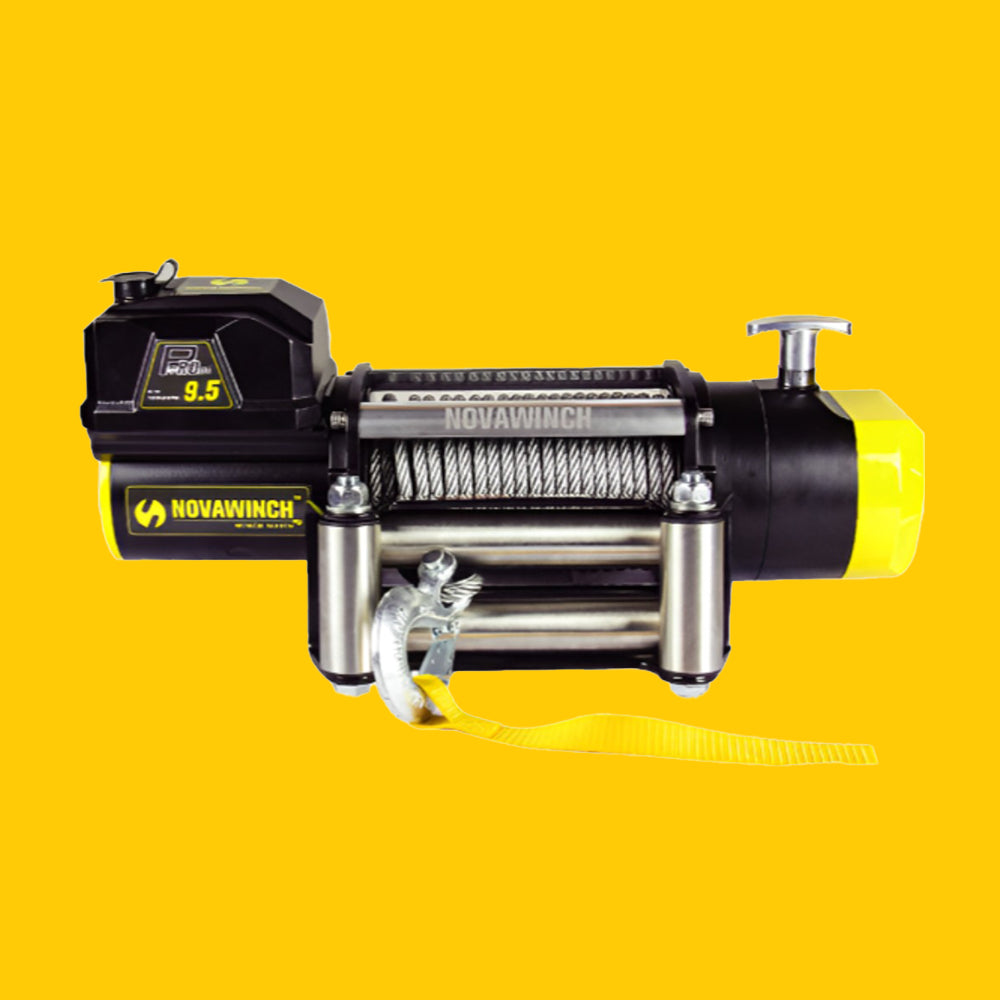
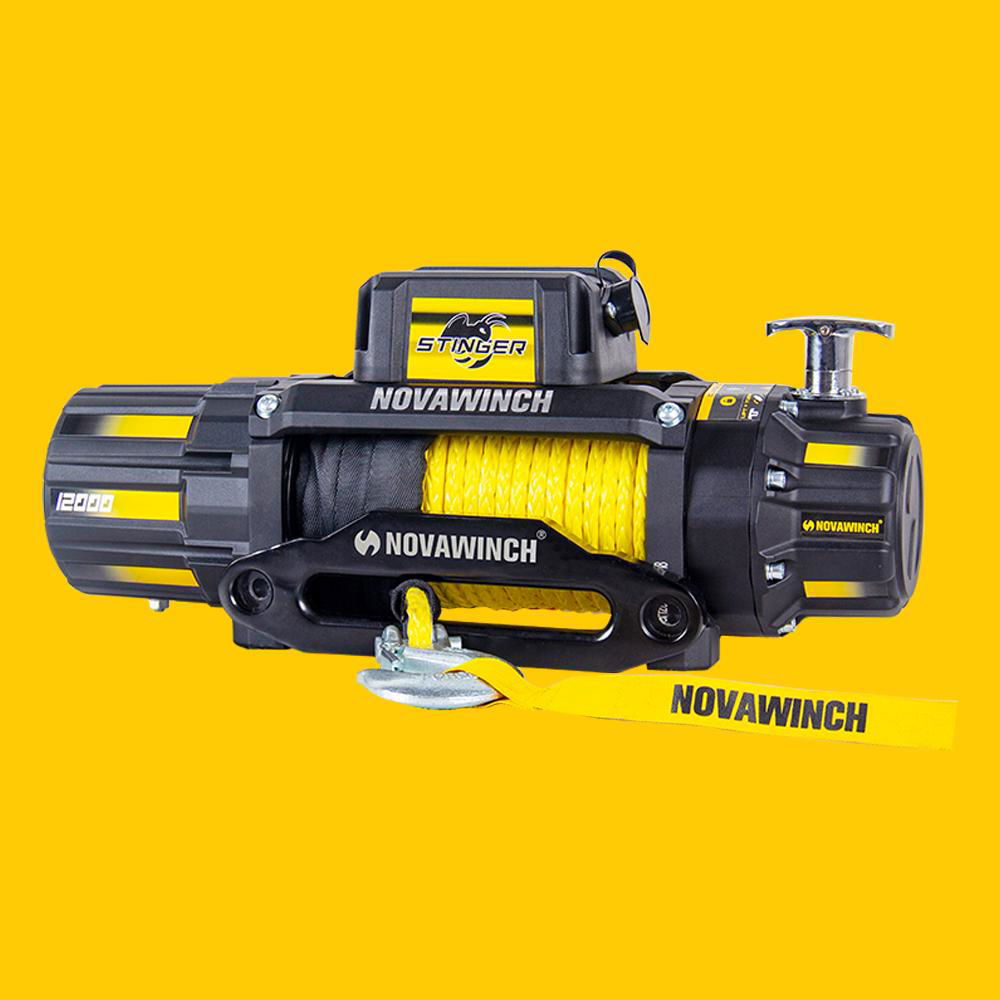
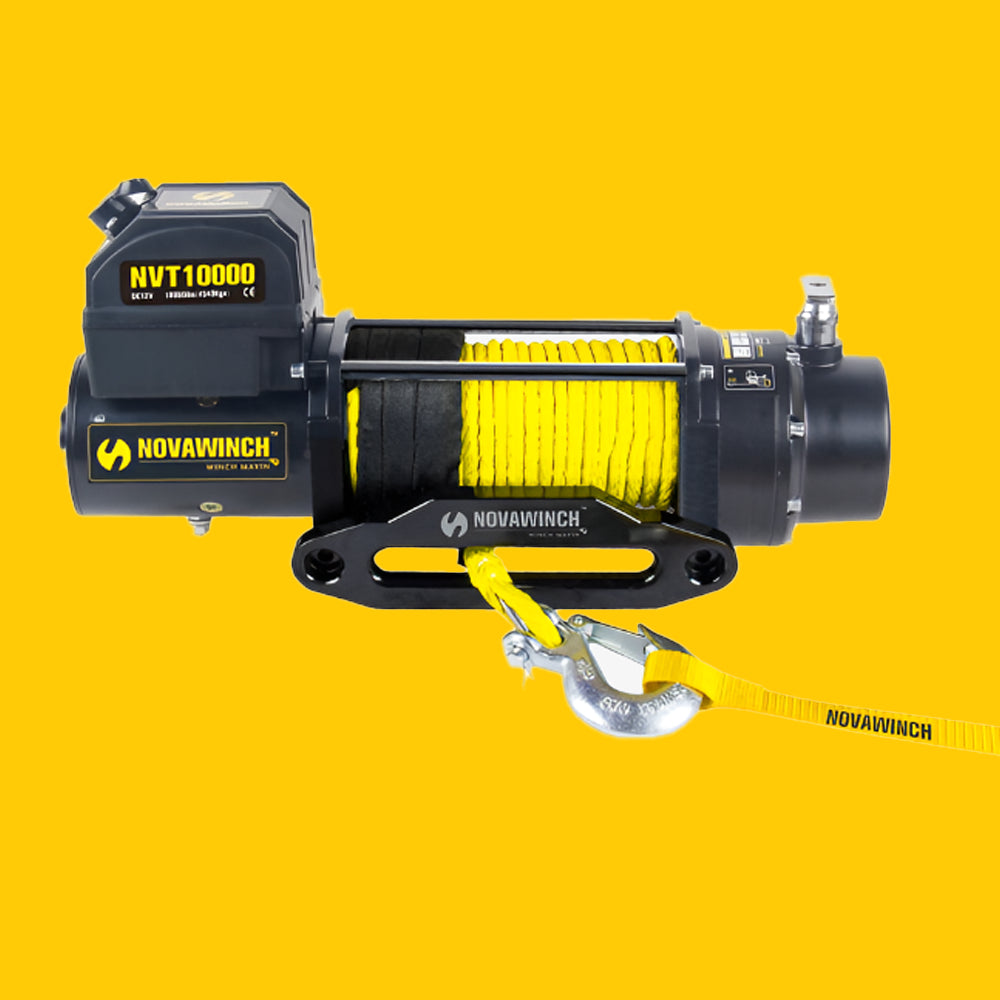
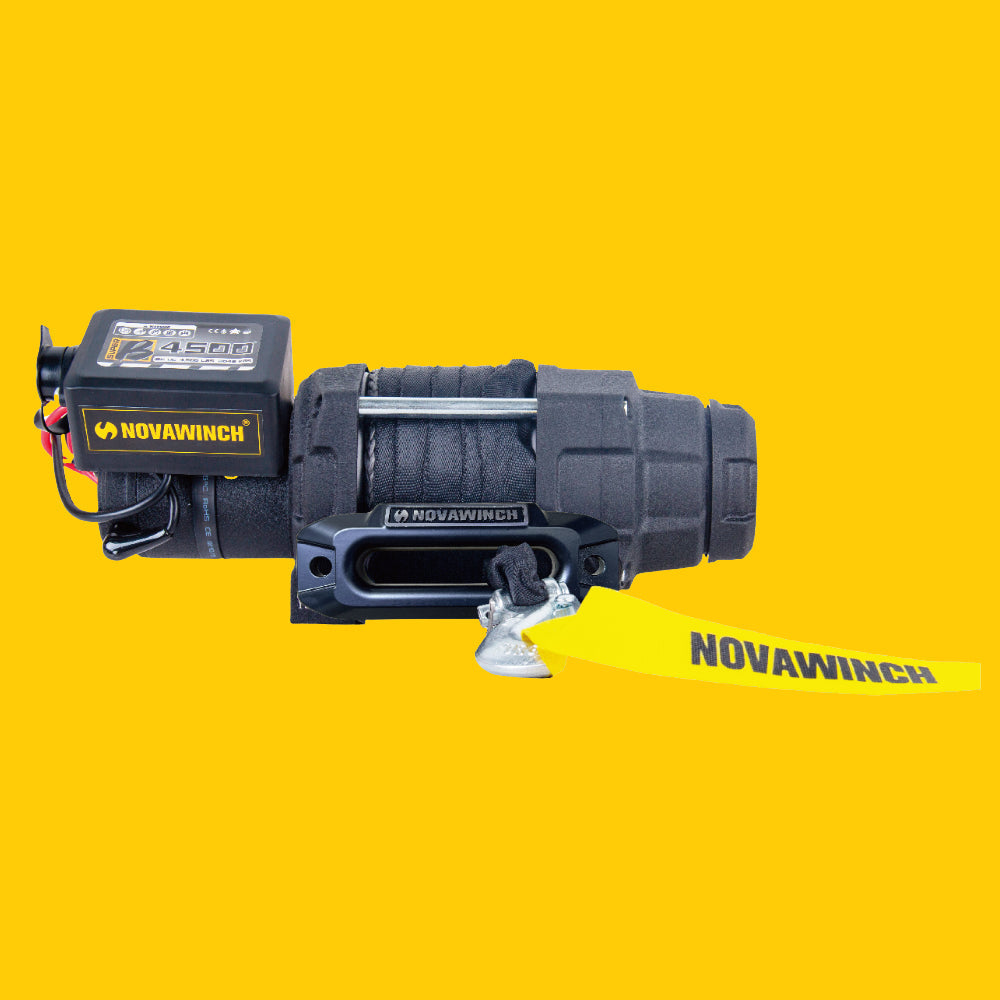
Novawinch recovery winches are available with different rope configurations depending on the model and application, including steel wire rope and synthetic options.
Before replacing the original winch line or converting from steel to synthetic, check the specification for the particular winch. Rope diameter, length, strength, drum capacity, attachment method and fairlead all need to be compatible.
For operators building a new recovery truck, it is better to choose the rope and winch installation together rather than treating the rope as an afterthought.
Start by determining the required winch capacity and operating duty. Then consider the rope length, material and handling characteristics appropriate for the recoveries the vehicle will actually perform.
If you're still choosing the winch itself, see What Size Winch Do I Need for a Recovery Truck?
If you're deciding between power systems, see Electric vs Hydraulic Winches for Recovery Trucks.
And if you want to understand why rope diameter and the amount of rope on the drum affect pulling capacity, see Winch Line Pull Explained.