%20(1).jpg)
.jpg)







£15.99
ex.VAT
was
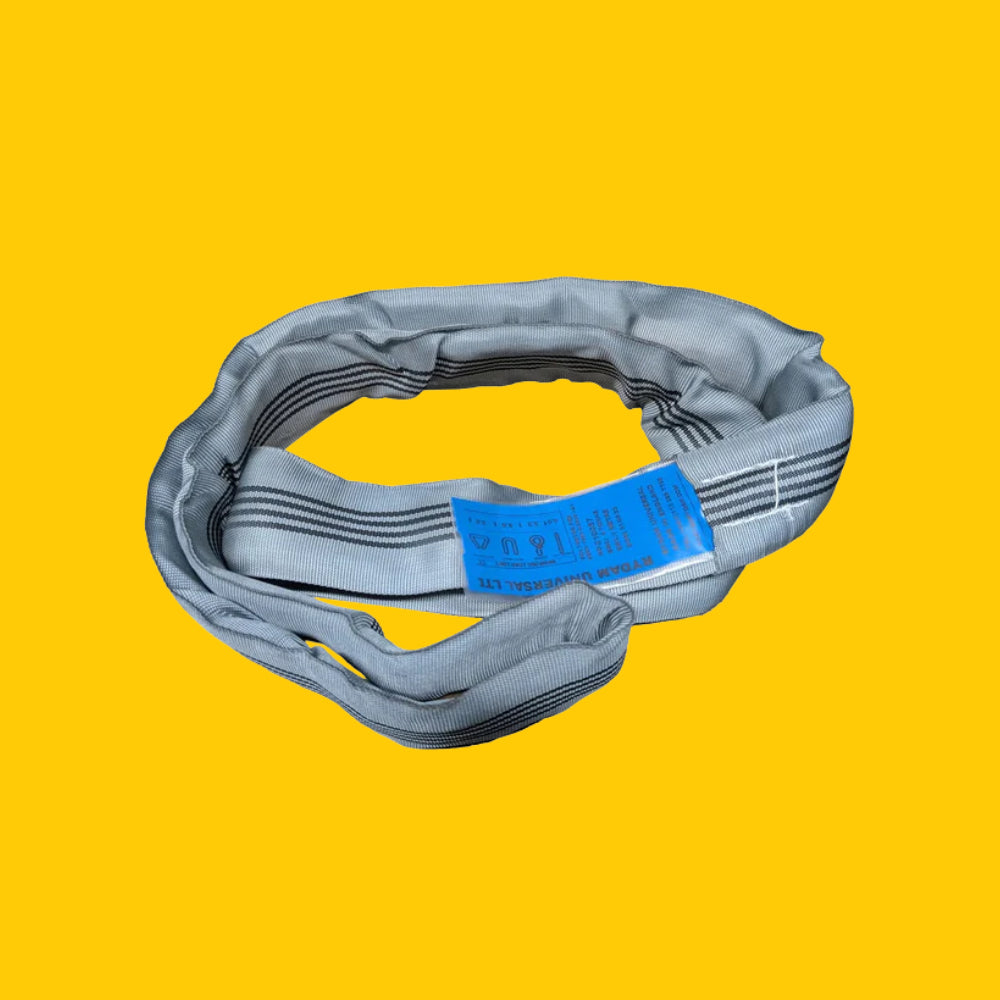
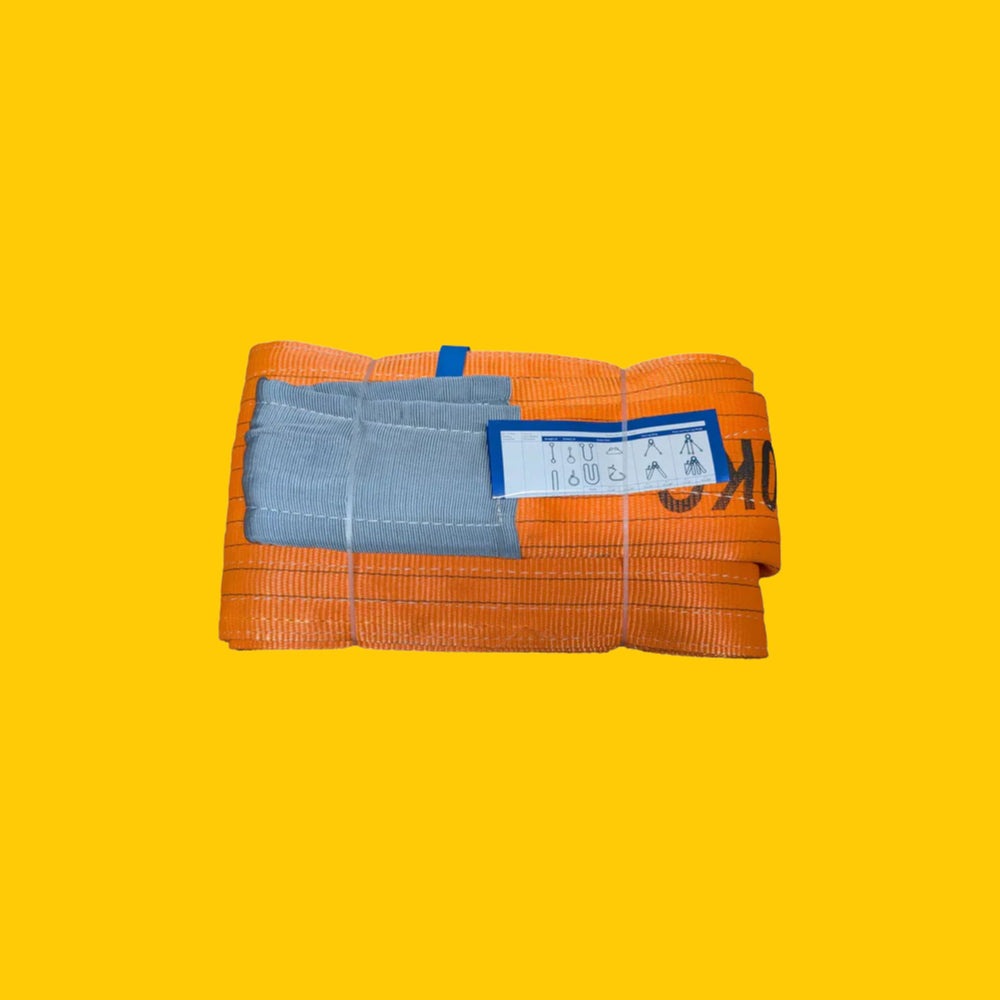
£15.99Our range of lifting slings includes flat webbing slings and round slings for commercial, workshop, automotive and industrial lifting applications.
Polyester lifting slings offer a lightweight and flexible alternative to heavier lifting equipment and are available in a range of lengths and working load limits to suit different loads and lifting arrangements.
The most suitable sling depends on the load, lifting configuration, contact surfaces and working load required.
Always select a sling according to its stated Working Load Limit (WLL) and the way it will be used. The effective capacity of a sling can change depending on the lifting configuration, sling angle and whether it is used in a straight, choke or basket arrangement.
Other considerations include sling length, load shape, edge condition, temperature, chemical exposure and the condition of the sling itself.
Never select lifting equipment by colour alone. Check the sling label, rated capacity and manufacturer's instructions before every lift.
Lifting slings should be inspected before use for cuts, abrasion, damaged stitching, heat damage, chemical attack, contamination or an unreadable identification label.
A sling showing signs of damage or deterioration should be removed from service and assessed in accordance with the relevant manufacturer's guidance and your lifting-equipment inspection procedures.
Sharp edges and abrasive surfaces can damage textile slings, so suitable edge protection should be used where required.
Browse our range of flat webbing slings and round lifting slings below in a variety of lengths and working load limits.
If you are unsure which sling is suitable for your lifting application, contact the Novawinch UK team for help with sling type, length and working load requirements.
The colours on a lifting sling indicate its Safe Working Load (SWL) under European standard EN 1492. For example, violet denotes 1-tonne, green is 2-tonne, and yellow represents 3-tonne capacities. Always verify the manufacturer's label before lifting, and pair your slings with certified Recovery Shackles for secure rigging.
Choose a flat webbing sling for spreading the weight evenly across fragile or wide loads. Alternatively, opt for round endless slings when you need superior flexibility to choke around awkward, cylindrical machinery. Both options are much safer for delicate payloads than heavy-duty Load Binders or steel chains.
Yes, under the UK's Lifting Operations and Lifting Equipment Regulations (LOLER), all slings must undergo a thorough statutory examination every six months. Using uncertified equipment is illegal and highly dangerous. Ensure your entire setup remains compliant by checking your Bow Shackles and attachment hardware regularly.
You must condemn a lifting sling immediately if it shows any signs of abrasive wear, cuts, chemical damage, or if the SWL label is missing. Damaged equipment risks catastrophic load failure. For heavy hauling rather than overhead lifting, browse our heavy-duty Ratchet Straps instead.